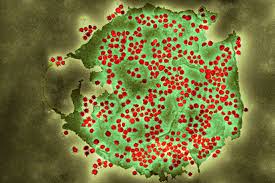
A new study has revealed how “good” fat tissue can be used to fight obesity and to remove glucose from the blood, which helps control diabetes. The work was published today in Science Advances by researchers from the Perelman School of Medicine of the University of Pennsylvania, the University of Cambridge, the Free University of Brussels, and the University of East Anglia.
The human body comprises two kinds of fats: white and brown. Brown fat is responsible for generating heat when exposed to cold temperatures. White fat is the majority of human fat. Too much white fat can lead to obesity and health problems.
The Krios G3i cryogenic electron microscopy at the Penn Singh Center of Nanotechnology allowed researchers to see mitochondrial uncoupling proteins 1 (UCP1), a protein that will enable fat tissue to burn calories as heat for the first. This research revealed new insights on how this protein’s brown fat cell activity could be harnessed to aid in weight loss.
UCP1 is a protein that gives brown fat in mammals the ability to burn calories for heat, maintaining a constant body temperature. UCP1 is activated by fatty acid and short-circuits mitochondria, the cell’s powerhouse for releasing energy. Short-circuiting produces heat, allowing the body’s temperature to be regulated through thermogenesis.
This work was funded by the Medical Research Council, U.K. (MC_UU_00028/2 and MC_UU_00015/1). The National Institutes of Health/National Institute of General Medical Sciences, National Institute of Biological and Biotechnological Sciences (BB/S00940X/1), and the Biological and Biotechnological Sciences Research Council funded this work (R01 GM073791 and F31 HL156431). The Nanobody Discovery was supported by Instruct-ERIC, a part of the European Strategy Forum on Research Infrastructures and the Research Foundation – Flanders, and the Strategic Research Program at the Vrije Universiteit Brussel.