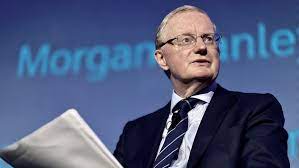
Take one for your team. This is the message Reserve Bank Governor Philip Lowe delivered to millions of Australians who are facing escalating mortgage payments.
Mr. Lowe, speaking at Morgan Stanley’s Australian Conference, acknowledged that his central Bank caused pain to those who had home loans and especially to those with recent large debts. However, he said there was no way to balance supply with demand and bring inflation down.
He said that interest rates are the tool RBA can use to achieve balance.
“I am aware that this tool is not without complications.”
But this unevenness does not mean we should avoid using the tools we already have.”
Yesterday, the RBA unleashed another blow of the interest rate hammer against the inflation nail by bringing the cash rate up to 4.1 percent.
Mr. Lowe said that the extreme pain now being felt by some households would be much worse if the Bank did not raise interest rates to the level necessary to control inflation.
He said: “It’s true that some households could have avoided the financial pressures associated with higher mortgage rates for a brief period if the board hadn’t raised interest rates in the manner it did.”
“But the short-term gains would have come at a higher cost on a medium-term basis.”
“This would be detrimental to all Australians, the economy, and our functioning. It would require higher interest rates to bring inflation down.”
When asked at what interest rate he expects a significant rise in mortgage arrears and forced sales, Mr. Lowe replied that the RBA’s discussions with banks indicate that most borrowers are coping.
People can afford to pay off their mortgages. The arrears rate remains low even as people switch from fixed-rate to variable-rate mortgages.
The people will pay their mortgages but cut back on spending elsewhere.
Lowe said it would be hard to stick to his “narrow” path to lowering inflation without a recession or a drastic increase in unemployment.
He said, “It’s still possible to navigate down this path. Our ambition is to do that.”
It will likely be a bumpy road, with risks on both sides.
Housing, wage, and productivity risk
Lowe stated that the high-interest rates are reducing the demand for goods and services and the price pressures on the economy. However, he added, “It is too early to declare victory against inflation” as rents, service costs, and electricity prices will likely rise again in the remainder of the year.
He noted that “services price inflation” is persistent here and abroad and that recent data on wages, inflation, and housing prices were higher than forecasts.
In the questions and answers session that followed his speech, Mr. Lowe emphasized this.
He said that the inflation rate for April was above expectations.
The RBA Governor said wage increases and low productivity growth are risks to getting the inflation back to its target range of 2-3%.
The Australian Bureau of Statistics (ABS) National Accounts will release the latest update on unit labor costs today. This measure measures the wages employers pay to achieve a given output level.
Mr. Lowe stated that these unit labor costs increased by about 7.5% over the past year, one of the most significant annual increases for decades. However, they declined during the pandemic and were generally weaker in the decade following the global financial crisis in 2008.
Mr. Lowe said that while the causality of inflation is positive and negative, continued strong growth in unit labor costs would be responsible for a high level of inflation.
“The best way of achieving a moderated growth in unit labor costs is to have a more robust productivity growth. This would also support durable increases in our real wages and national wealth. It would make more resources available for funding the public services people value.
“Unfortunately, productivity growth has been slow in recent years. Australia’s output per hour of work is the same today as at the end of 2019. “This means that there has not been a net increase in productivity since then.”