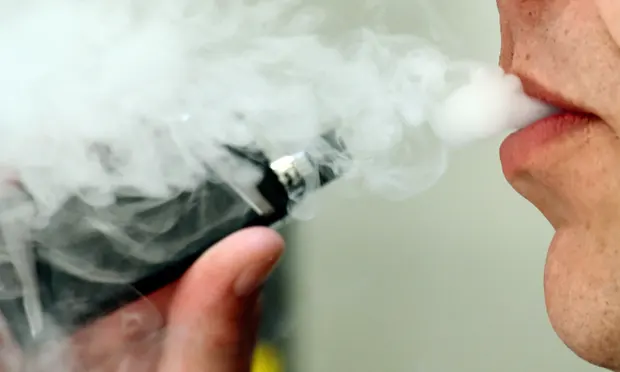
Research shows that smokers who receive text messages encouraging them to quit and help choose the flavor of their e-cigarette are more likely.
In a London South Bank University study, researchers explored how vapes can help smokers quit. After three months, one-quarter of smokers had given up the habit, and another 13% had reduced their Smoking by more than 50%.
Research showed that people who were given support in choosing a flavor of vape and received supportive messages were more than 55% likely to quit within three months compared to those who didn’t receive these services.
Professor Lynne Dawkins of LSBU’s nicotine and tobacco studies said, “Smoking kills around 8 million people every year. Even the most effective treatments are not able to reduce the number of smokers.” After three months, 24.5% of the patients were no longer smoking, and 13% reduced their cigarette intake by over 50%.
The simplicity of tailored support via flavor advice and supportive messaging could significantly impact helping people live smoke-free.
The study examined five strategies to encourage people to stop smoking after receiving an e-cigarette purchased online. Interventions included: tailored advice about which product to buy, the nicotine strength and flavor to choose, brief information on vaping’s harms compared to Smoking, and text message support. Some people got all three, while others only received one. Others received some of them but not all.
Information on the product, nicotine strength, and vaping’s harms compared to Smoking didn’t improve quit rates. This study was conducted in collaboration with partners at University College London (UCL), the University of East Anglia(UEA), and the University of New South Wales(UNSW) to recruit 1,214 participants via social media.
In early 2018, the government announced 1 million smokers would be given vape starter kits as part of the “swap-to-stop” scheme to “make the nation smoke-free.” Health Minister Neil O’Brien announced that the kits would be given to nearly one-fifth of smokers in England as part of the first-ever initiative of its kind.
The scheme is the first of its kind in the country. Those who wish to exchange can choose from various strengths, flavors, and products. The project is expected to cost around PS45m in two years. This money will come from the Department of Health & Social Care budget.
Deborah Arnott is the CEO of Action on Smoking and Health. She said that vapes and vouchers are welcome, but more is needed.
There is concern that the nation’s pledge to become smoke-free by 2030, i.e., reducing smoking rates below 5%, will not be achieved.