The glenoid laboratory rum, the cartilage tissue that covers the shoulder joint where the arm attaches, can be repaired by arthroscopic surgery. However, this will weaken the joint and require a long recovery.
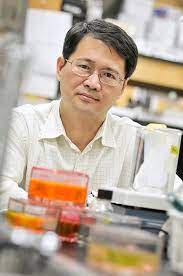
Liping Tang is a professor of bioengineering at The University of Texas at Arlington. He has developed a method for repairing labrum tears. This new technique would allow the body to regenerate tissues to fully reattach both sides of the incision. The National Institute of Arthritis and Musculoskeletal and Skin Diseases of the National Institutes of Health awarded him a $2.1 million five-year grant for his research. This would be an improvement on the current standard of treatment, which relies only on sutures to hold the joint in place at specific points.
“We can’t prevent aging or injury, but we can ensure that injuries heal faster and with a better recovery in terms of function,” Tang said. “Many surgeries repair damage but do not guarantee a return to function. We are focusing on the return of function.
Biochemicals are released by the body when it suffers a wound to alert the surrounding cells of the problem. The progenitor cell attaches to the site of injury and begins repairing it. Progenitor cells can’t reach the glenoid laboratoryrum, which acts as a cushion in the shoulder.
Baseball players are more likely to tear their labrums when they throw. The injury can end a baseball player’s season because of the long recovery period. Even after healing, the joint will never be as strong as before the injury.
Surgeons use suture anchors to repair a labrum rupture at different points along the tear. Tang’s method involves injecting an adhesive along the tears, forming a scaffold that attaches to cartilage and attracting progenitor cells that regrow the labral tissue. The repair would be more robust, and recovery time would be reduced.
The new technique could replace hips in older adults using a more robust, safer alternative than traditional methods.
Tang explained that “this method allows the body to regenerate its own tissue, rather than relying solely on suture points which may not last,” there’s a better chance that patients will fully recover their strength and functionality. This is good news for everyone, from athletes to older adults.