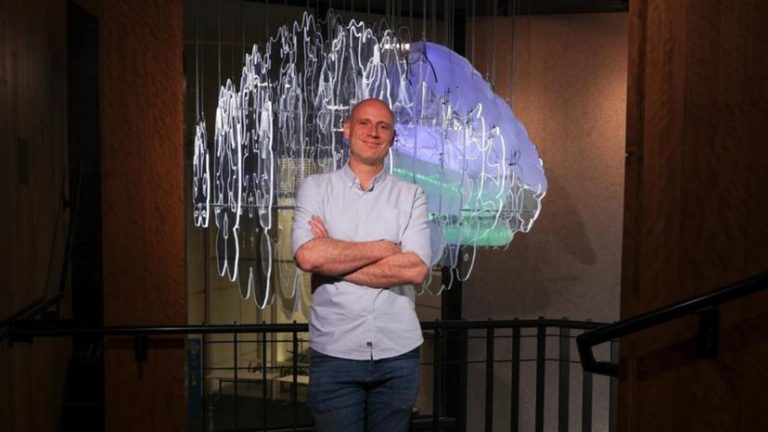
The shape of the brain has a much more significant impact on how a person behaves, thinks, and feels than was initially thought.
Researchers at Melbourne’s Monash University examined the long-held belief that brain activity patterns result from a complex network of neural connections.
The study published in Nature on Thursday found this was only sometimes the case.
According to AAP, it turns out that brain activity is like a wave of water moving through the brain.
Imagine a raindrop that falls into a pond. It will cause ripples to fan out. The shape of the pond influences the ripple pattern you see.
The shape of the human brain influences the pattern of brain activity similarly.
The Monash-led research analyzed more than 10,000 brain maps taken by MRI as people performed different tasks.
Researchers used maps to examine a brain vibration’s eigenmodes or natural patterns.
Professor Fornito stated that “the eigenmodes in the brain influence activity patterns.”
We found that the eigenmodes in the brain’s shape were more critical to understanding the function of the brain than the eigenmodes in connectivity.
This is the first study to establish a relationship between brain activity and shape. It could change how diseases are detected or predicted, said Prof Fornito.
“Since everyone’s brain is unique, like a fingerprint or a face, the differences in brain shapes are likely linked to the differences in how we behave and think in the world,” said he.
Suppose we can understand how the brain develops early. In that case, it may shed light on mechanisms that increase the risk of mental illness and neurological disorders such as schizophrenia, depression, and dementia.