Penn Engineers manipulated white blood cells by silencing a molecular pathway that prevents macrophages from attacking our cells.
Over 600,000 Americans die from cancer each year. The treatment of cancers that are solid tumors, such as those in the brain, breast, or skin, is complicated. Patients with solid tumors are usually treated first by surgery. Surgery may not altogether remove cancerous cells. Leftover cells can then mutate and spread to other parts of the body. The blunt surgery approach could replace a more targeted, holistic treatment that uses our cells to eliminate cancer from within.
Dennis Discher and Larry Dooling (postdoctoral fellow) provide a novel approach to targeted therapies for solid tumor cancers in the study published in Nature Biomedical Engineering. The treatment kills cancerous cells and teaches the immune to recognize them and kill them again in the future.
Discher says it’s challenging to create molecules that can penetrate solid tumors because of their physical properties. Instead of designing a new molecule, we suggest using macrophages that can ‘eat’ invaders.
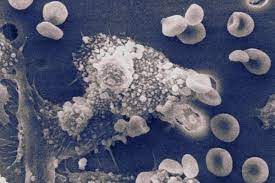
Macrophages are white blood cells that engulf and destroy invaders like bacteria, viruses, and even implants. The innate immune response of macrophages helps our bodies remember invading cell types and fight them in the future. This acquired immunity is crucial to the creation of a cancer vaccine.
Dooling says macrophages do not consider cancer cells invaders but rather parts of the body. We needed to examine the molecular pathways that control cell-to-cell communications to allow white blood cells to see and attack cancerous cells. This therapy was created by turning off the path, a checkpoint between a macrophage protein called SIRPa and the CD47 on all “self” cells.
The engineered macrophages have been tested on “toroids,” conglomerates of mouse melanoma cells in culture plates. The macrophages clustered around the cancerous cells and picked them apart, destroying the tumor.
In vivo, tests showed that the engineered cells could eliminate tumors from 80% of mice. Notably, the elimination of tumors triggered an adaptive immune response. The anti-cancer immunoglobulin G antibodies increased a few weeks later.
This engineered macrophage treatment works best when combined with existing antibodies. One day, patients can rely on engineered cells to eliminate solid tumors and the need for further treatments.
The key to developing a cancer vaccine may be macrophage therapy. It destroys cancer cells and teaches the body how to eliminate cancerous cells that arise in the future. This could prove to be a game-changer in the battle against cancer.
This study was a collaborative effort by several members of the biophysical engineering laboratory led by Dennis Discher. These included co-lead authors and postdoctoral students Jason Andrechak and Brandon Hayes. Grants from the National Heart, Lung, and Blood Institute, the National Cancer Institute, and the Physical Sciences Oncology Network of the US National Institutes of Health supported this research.