Researchers at the University of California Irvine have identified a critical gene for muscle repair that is expressed during regeneration. The key gene for human skeletal muscles was found in a subset of muscle fibers capable of supporting human muscle stem cells following transplantation.
The skeletal system is one of the most regenerative organ systems. However, more than 400 muscle disorders and injuries are clinically present, such as rotator cuff injuries and certain muscular diseases, like Duchenne Muscular Dystrophy or congenital muscle dystrophy.
Michael H. Hicks, Ph.D., assistant professor at the Department of Physiology & Biophysics, UCI School of Medicine, and April D. Pyle, Ph.D., professor at the Department of Microbiology, Immunity and Molecular Genetics, UCLA, are co-corresponding authors of the study.
In November, Nature Cell Biology published the study Regenerating human muscle forms a niche in vivo that supports PAX7 cells.
Our muscles are able to repair themselves when they suffer an injury. In severe injuries or genetic muscular diseases, the power cannot regenerate new tissue. Researchers have found that a solution would be to replicate the way a healthy body repairs its muscle by using cells taken from a dish. This is because newly made power in a laboratory can support stem cells much better than exhausted muscle tissue.
The Hicks laboratory hopes to treat rotator-cuff muscle tears, which can affect up to 30 percent of those over 65.
The rotator cuff muscles can cause loss of mobility and lead to prolonged hospitalization and dependency on healthcare providers. The rotator cuff tendon is attached to the bone by surgery, but the muscle does not regenerate.
Hicks has also been funded by UCI Anti-Cancer Challenge for his approach to muscle reconstruction for cancer survivors after radiation therapy.
Hicks said that “muscle stem cell exposure to radiation is significant during radiotherapeutic treatment of cancer.” The use of ionizing radiotherapy has the potential to damage muscle stem cells and limit the recovery of muscles after disuse or with age.
The niches are anatomically defined compartments that support muscle stem cells and regulate the balance between self-renewal, differentiation, and regeneration over the lifetime of a person. It is important to be able to create new niches for stem cells in long-term cell therapy, where transplanted muscle cells are required to balance the formation and maintenance of new muscle fibers.
Researchers have shown that the formation of regenerating myofibers after transplantation is a source of niche emergence previously overlooked.
Pyle said that this subset of regenerating muscle fibers had a 50-fold higher ability to support muscle progenitor cell transplantation. I would like to see if myofibers could be stimulated in disease or homeostasis settings to make skeletal muscles more regenerative.
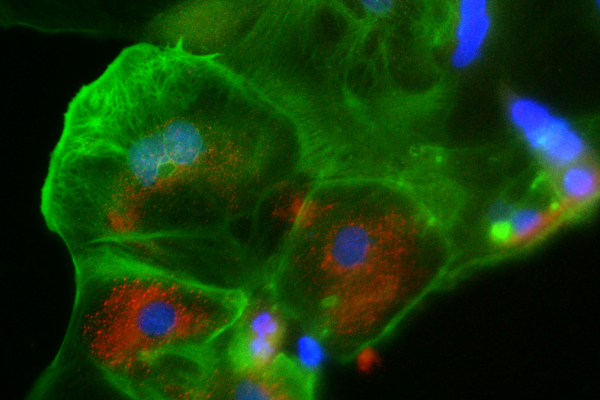
Researchers used a new technique called spatial RNA sequence to characterize further the interaction between transplanted muscle cells and the subsets of muscle fibers that contain a unique gene named ACTC1. The UCI Genomics Research and Technology hub recently acquired equipment that can segment cell types adjacent to each other and obtain RNA data from these cell types.
Ben Clock is a UCI graduate and was also involved in this study.
The team will continue to explore the restored muscle function in the future. They plan to assess the ability of newly formed human muscles to connect with motor neurons and restore motor control for the transplanted cell.
The Hicks Lab at the UCI School of Medicine will pursue both basic and clinical avenues in their next steps. The US, Europe, and Japan are currently reviewing patents for the ability to create these muscle stem cells in the laboratory. Hicks and Pyle have also plans to launch a company that will translate muscle stem cell technology for patients.
Hicks and Pyle, in a 2017 study, made significant progress with gene editing to repair and create skeletal muscles, called progenitor cells, in the laboratory. Despite this, it has been difficult to retain human muscle progenitors following the transplantation of cells grown in a lab.
The results of this study identified key receptors and potential ligands on muscle progenitor cells that may allow them to interact with myofibers. However, these candidates must be validated first before they can serve as therapeutic targets for improving muscle regeneration.