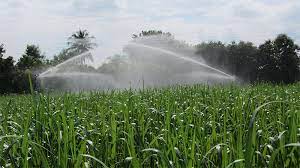
Researchers at James Cook University have developed an online tool that allows cane farmers to compare different irrigation management options. This will reduce electricity and water consumption and increase profits.
Dr. Brian Collins is the Senior Research Fellow of JCU’s Agriculture Technology and Adoption Centre.
He said that the Irrigation Quick Assessment Tool (iRAT) was designed to help cane growers understand the impact of changing irrigation management on the productivity and profitability of their paddocks.
Dr. Collins said the tool would help farmers understand how to save water and energy without sacrificing cane yield in variable climates.
He said that the JCU team developed iRAT to help the industry see how small, large, and medium changes to irrigation management can increase profits, save water, and reduce energy costs.
“i-RAT harnesses computer modeling power and combines it with the knowledge and expertise of local cane farmers and advisors, allowing rapid comparisons of thousands of combinations of farm management scenarios that are impossible in the field,” said Dr. Collins.
Professor Yvette Everingham, Director of AgTAC (AgTech and Adoption Centre), views i-RAT as a tool that connects financiers with cane growers.
She said that i-RAT’s quick and easy ‘what-if?’ analyses could help inform funding and incentive structures about investment in new irrigation technology since i-RAT provides scientifically validated data showing how investment in irrigation can lead to positive outcomes.
Given the climate models’ predictions of a transition towards El Nino conditions, Professor Everingham said that i-RAT would be a handy tool for improving drought resilience. El Nino favors dryer conditions.
JCU partnered up with AgriTech Solutions to develop iRAT. AgriTech Solutions is an irrigation and agronomy firm based in Ayr (North Queensland). The project was funded through a partnership between Reef Trust, an Australian Government agency, and the Great Barrier Reef Foundation.
The first phase, which covered the Burdekin area, was completed by November 2022. The second phase covers the Mackay Whitsunday area and is currently in progress. It will be complete by May 2024.