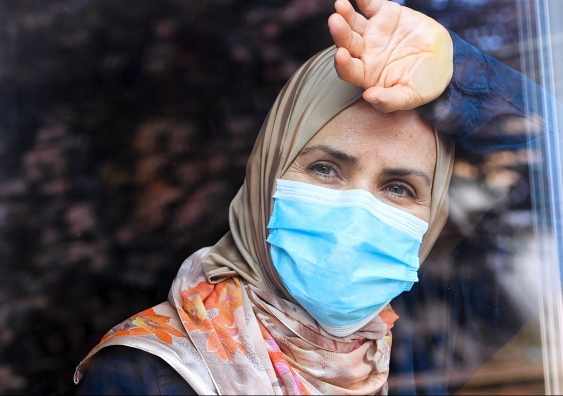
Nawal Nadar fled her native Lebanon because of war. She first went to Kuwait and the United Arab Emirates before arriving in Australia in 1998. Ms. Nadar is a maternity officer at Blacktown Hospital in Sydney’s West. She also helps women from backgrounds affected by conflict. Their experiences are very different from those born in Australia. This is especially true when it comes to mental health.
“They’ve gone through a lot.” They were forced to leave their villages and homes. “They’ve lost it all,” says Ms Nadar.
Ms. Nadar observed that the COVID-19 pandemic brought back trauma for this group and exacerbated mental health problems. Until now, these struggles were mostly hidden. COVID-19 research on mental health has primarily been conducted through self-reporting or online surveys, mainly amongst the general population.
“For many women, the pandemic brought back bad memories. “Even though we no longer have lockdowns, the situation is far from over,” says Ms Nadar.
The study, published in a compared these women to Australian-born women. This study was published in PLOS Global Public Health. It reached the women with Australian-born women.
“We were incredibly worried to see that women with refugee backgrounds had higher levels of mental concerns associated with COVID-19,” said first author Prof. Susan Rees, a professor in Psychiatry at UNSW Medicine & Health.
When people discuss mental health, they rarely consider the unique experiences of women from conflicting backgrounds. There may be underlying mental problems. “Not enough attention is paid to support people financially, psychologically, and socially when they settle in Australia.”
Monitoring vulnerable groups
Researchers have been tracking women in Australia for a long time as part of the WATCH Cohort Study. In 2015 and 2016, a sample of 1335 women was recruited from three public antenatal centers in refugee-dense suburbs in Sydney and Melbourne. About half of the women recruited were Australian-born, and the other half were refugees from countries in conflict (mainly Iraq and Lebanon).
Researchers conducted interviews and surveys over the years with both groups to assess their mental health and other factors such as financial stress, traumatic experiences, and social support networks. Prof. Rees says that women with refugee backgrounds of childbearing years are at heightened risk for mental distress.
Women’s health, mental health, and perinatal experiences are neglected. This is a sensitive period. If you examine the demographics of new arrivals, a large group of women in childbearing years are from conflict-affected areas. “These women have special needs and require support and intervention,” says Prof. Rees.
Researchers found that COVID-19 stressors can trigger trauma in women from refugee backgrounds. Trauma triggers cause someone to remember a traumatic event, causing mental health issues and interfering in their daily lives.
The researchers have now taken it a step further. The researchers conducted an in-depth survey with 650 women of the WATCH cohort between February 2020 and June 2021. The women in this sample were born in Australia, and 52 percent are refugees. Researchers quantified COVID-19 pandemic-related mental distress and material hardship. They also explored the relationship between these factors and quantified mental disorders.
Prof. Rees explains that they used diagnostic measures to identify various mental disorders, including some that are more common and others that tend to affect traumatized people.
Mental distress is increasing in rate.
Nearly half (47.3%) of women born in Australia who participated in the study said they had a severe problem’ dealing with COVID-19-related stress or fear. This rate was much higher (66.7%) for women with refugee backgrounds.
According to Professor Rees’s findings, the past trauma of women from refugee backgrounds contributed to their higher anxiety and stress levels.
Professor Rees explains that if you’ve had a prior trauma, you may be more sensitive to having a more significant stress response when you encounter additional stressors.
Women fear the loss of livelihood and health, and they are affected by the death of their family members and children. Separation from the family back home and isolation are other essential factors. Lockdowns have caused concern in the past because many of these people are from countries where they were controlled and persecuted. “There was a lot more anxiety when there were police on the streets of Western Sydney.”
The rate of women with refugee backgrounds was higher (47.2%) than that of Australian-born women (32.5%). Material hardship combines economic and social issues, such as losing your job or insufficient money to cover daily expenses.
COVID-19, associated with an increased prevalence of social and economic factors, has also been linked to a higher level of mental distress in women of refugee origin.
Pandemic struggles far from over
This is an example of a large-scale, systematic study of the mental health of Australian women of refugee origin during the COVID-19 Pandemic. Professor Rees believes this type of research is crucial to show that these women are in need and advocate for better services and support.
Researchers are applying for funding from the National Health and Medical Research Council to extend the WATCH study. The researchers will follow the women longer and examine their children’s mental development and health.
“There is a need for a greater awareness of the impact COVID-19 has on mental health today, and not only in the past.” Australia will also gain from future evidence on what is required and where to focus on reducing risks and assisting those at most significant risk,” says Prof. Rees.
“We must work together to support those who need it most during COVID-19. Some of us are trying to move on and may have better resources. “But for many people with trauma, socially and economically disadvantaged, the pandemic has not ended.”