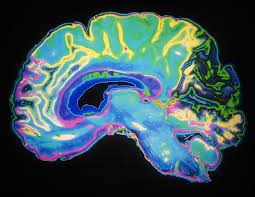
Over a quarter (25%) of stroke victims suffer from a strange disorder where they cannot perceive half of what their eyes see.
A person may eat only the food on the right-hand side of their plate after a stroke to the right-hand half of the brain. They are unaware of the left. A person might only see the right side of a picture and not notice someone to their left.
Surprisingly, stroke victims can emotionally respond to the whole photo or scene. These people may seem able to take in the entire world, but they are only aware of half.
This mysterious condition, unilateral neglect, brings to light a question lingering in the brain sciences for a long time: What is the difference between merely perceiving and being conscious or aware of it? While scrolling through Instagram, you may have yet to notice that you have passed a shoe shop. Yet you began searching for shoe sales online. Your brain remembers things you may not be aware of.
Scientists at the Hebrew University of Jerusalem and the University of California Berkeley report that they have possibly found the area of the brain in which these sustained visual images can be retained for the few seconds it takes us to perceive them. The findings were published in the Cell Reports journal this month.
These studies could be helpful in the future. They may allow doctors to determine from the brain activity of a coma victim whether they are still aware of their surroundings and if the patient can recover. Understanding consciousness could also help doctors create treatments for disorders of consciousness.
“The inspiration behind my entire scientific career is patients who have suffered a stroke and suffer from unilateral negligence, where they ignore half the world,” said Leon Deouell. He is a Hebrew University psychology professor and an Edmond and Lily Safra Brain Research Center member. “That sparked my interest in conscious awareness. How can you have information but not recognize it as a subjective experience, not act on it, not move your gaze to it, or not grab it? What’s required to not only have something sensed by your brain but also for you to feel it subjectively? Understanding this would help us to understand what’s missing in patients with this type of syndrome.
Robert Knight, a senior author at UC Berkeley and a professor of psychology who is a member of the Helen Wills Neuroscience Institute, said: “We’re adding a new piece to the consciousness puzzle – how you can act on the things that remain in your head.”
The brain can have a transient response and a sustained one.
Deouell pointed out that electrical studies on the brain have focused almost exclusively on the first surge of activity following a perception for the past six decades. This spike disappears after 300 to 400 milliseconds. We are often conscious of something for seconds or even longer.
He said: “That leaves an enormous amount of time that cannot be explained in terms of neural processes.”
The neuroscientists wanted to find out if there was a longer-lasting effect, so they asked ten people to consent to have their skulls opened to place electrodes on the brain’s surface to track the neural activity associated with epileptic seizures. Researchers recorded the brain activity of electrodes while showing patients different images on a computer monitor for different durations, up to 1,5 seconds. Patients were asked to push a button whenever they noticed an item of clothing on a computer screen. This was to make sure that they were paying attention.
Most methods used to record neural activity in humans, such as functional MRI (fMRI) or electroencephalography (EEG), only allow researchers to make detailed inferences about where brain activity is happening or when, but not both. The Hebrew University/UC Berkeley scientists were able to bridge this gap by using electrodes implanted in the skull.
The team analyzed the data with machine learning and found that contrary to previous studies, which showed only a brief burst in activity when something was perceived for the first time, the visual regions of the brain retained information on the percept much longer at a lower activity level. The pattern of sustained neural activity was the same as the initial pattern and changed when the person saw a different picture.
Deouell stated, “This stable representation suggests a neuronal basis for stable perception in time, despite changing levels of activity.”
They found that, unlike some previous studies, the prefrontal cortex and the parietal cortex in the frontal part of the brain only become active when something is perceived as new. Information disappears entirely within a half-second (500 milliseconds) for even a more prolonged stimulus.
The occipitotemporal region of the visual cortex at the back of your brain is also very active for about 300 milliseconds. It then drops to a low but sustained activity level, around 10% to 20% of the original spike. The action pattern doesn’t go away; it lasts as long as the person views an image.
Deouell explains: “The frontal cortex plays a role in the detection and recognition of something new.” “But there is also a continuous representation in the higher level sensory regions.”
The sequence of brain events could be interpreted differently. Knight and Vishne tend to believe that conscious awareness occurs when the prefrontal cortical cortex reaches out to the sustained activity of the visual cortex. Deouell thinks that consciousness results from connections between many brain areas, with the prefrontal cortices being only one.
A group calling itself the Cogitate Consortium has confirmed the team’s findings. The consortium’s results are still being peer-reviewed, but they were presented at a New York City event in June. It was described as a “feud” between two “leading theories” of consciousness. The Cell reports and unpublished results could fit into either consciousness theory.
Deouell warned: “This adversarial cooperation involves only two theories from the 22 theories of consciousness that exist today.” “Many theories means we don’t know.”
The two studies and other ongoing studies, which are part of an adversarial collaborative initiative initiated by the Templeton Foundation, could still lead to a testable, true theory of consciousness.
Both theories were correct in their predictions. Vishnu stated that, in the current state of affairs, none ofheories work. I need to be revised: “With so many unknowns about the neural basis for consciousness, more data is needed before a new theory can be reborn from the ashes of previous theories.”