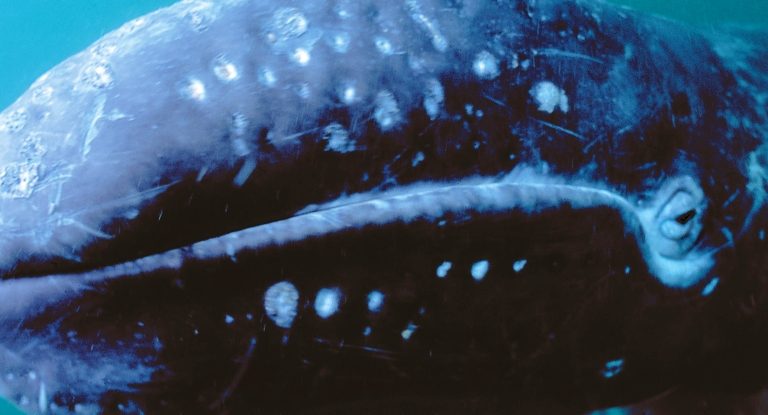
Life continues even after death. Even in the depths, a whale carcass can create and sustain a mini-ecosystem for many decades.
The remains of a whale found deep in the North Pacific waters are helping scientists to understand how ecosystems thrive.
The massive carcasses of these whales are called ” Whale Fall,” discovered by Monterey Bay Aquarium Research Institute in 2009 at Clayoquot Slope, 1,250 meters (4100 feet) off the coast of British Columbia.
Since 2012, scientists from Ocean Networks Canada have visited the site frequently to track changes in marine life and the decomposition rate.
While in the area, Fabio DeLeo, a benthic ecologist from ONC, used the ROV Hercules, a remotely controlled submersible, to take high-resolution videos and a photogrammetry study of the whale fall.
In a blog post, OET states that whale falls are an oasis for marine life in the often food-poor depths of the ocean.
Monterey Bay National Marine Sanctuary scientists found a fresher whale carcass in 2019 on the 3,200-meter-deep Davidson Seamount. Around four months old, the corpse crawled full of octopuses and eelpouts. It also contained worms, grenadiers, and crabs.
Even though the Clayoquot Whale Fall is in shallower water, its seafloor remains permanently dark since the Sun can’t reach bathypelagic levels.
The Clayoquot whale falls are not known to be of any particular species. De Leo points out that the site is near a gray whale migration route ( Eschrichtius robust), so identification is likely. The site is alive with life even after 14 years since the carcass was found.
OET reports that “the skeleton supports an abundant benthic flora.”
Among the species seen were limpets (Cocculina craigsmithi) and sea slugs (Mitrella cf. Barham).
“These tubeworms are likely the same individuals that were seen in 2009 and they’re still making a nest on the left jawbone of the whale. This is remarkable,” wrote OET.
The columns that you see are the eggs. The eggs are also a food source for other animals, such as crabs.
Researchers also collected seafloor sediment samples surrounding the whale’s fall. The samples will be tested for environmental DNA. This will allow a better understanding of the organisms lurking in the dark, feeding on corpses, and thriving.
The Ocean Exploration Trust’s Nautilus Live website allows you to follow the EV Nautilus adventures.