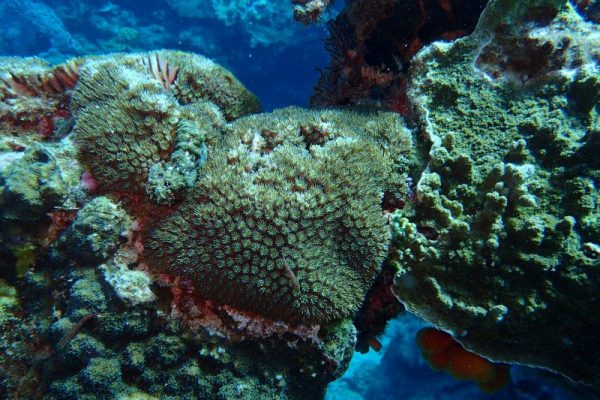
According to the Great Barrier Reef’s latest report, mass bleaching in what should have been cooler weather has stopped coral recovery on two-thirds of the reef.
According to the Australian Institute of Marine Science 2022 Coral Cover Report, this was the fourth mass bleaching event on the reef in seven years.
It was the first time that it occurred under a La Nina pattern.
La Nina occurs when the ocean temperature is typically more relaxed.
Climate watchers have been very concerned by the findings.
The 2022 bleaching event was less fatal than the two consecutive events in 2016 and 2017 but caused enough damage to offset gains.
There is a slight reduction in coral growth on the entire reef compared to a year earlier.
David Wachenfeld, research director at the University of Florida, said that “it caused enough mortality” to stop recent gains in regional hard coral coverage.
The heat stress during the bleaching episode also had likely sub-lethal impacts, including coral growth and reproduction reductions.
Mike Emslie, who heads the long-term monitoring program for reefs, said that the majority of reefs within the system had yet to see much change.
It means that the reef still faces a risk of declining from more frequent disturbances.
Scientists are worried about the arrival of El Nino this summer.
The weather pattern causes high ocean temperatures and dry weather conditions.
Dr. Emslie says Australians need only look back at 2016 to see what El Nino did to the reef.
In 2016, a nine-month heatwave in the ocean killed 30 percent of corals on the reef.
“To give the reef its best chance at survival into the future, it is necessary to reduce global emissions in order to stabilize temperatures and continue best-practice management for local pressures like the crown-of-thorns starsfish,” said Dr Emslie.
UNESCO declared that the Great Barrier Reef does not belong to this month’s “in danger” list.
UN Scientific Advisors has demanded urgent actions, which the World Heritage Committee will accept in September.
However, the Australian Academy of Science warned that reef damage could be irreversible by 2050 even if emissions stabilize.