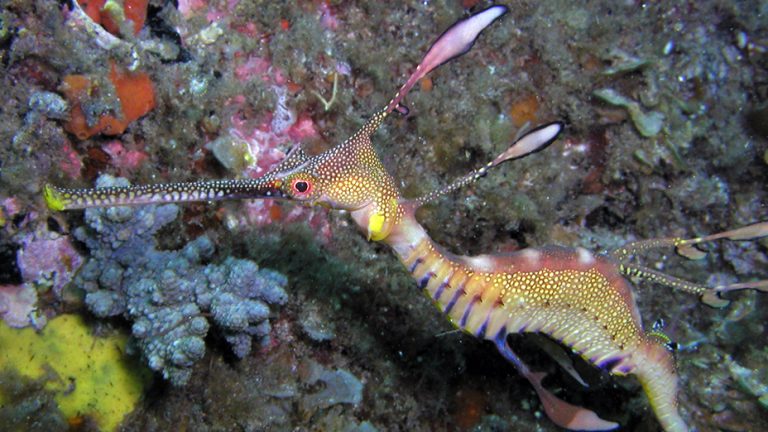
Genetic research has revealed that the elusive and charming weedy Seadragon, a fish only found off the coasts of southern Australia, is one species. It’s not two, as was previously believed.
The University of Western Australia, as part of an international research team, studied the weedy Seadragon by using modern genetic sequences across multiple populations that span over 5000km of the ocean on the Great Southern Reef.
Researchers had to spend many hours searching for seadragons in their underwater habitats. They are known for their camouflage, which is unique, and for the striking colors they display.
The researchers used samples of museum collections, aquaria, and existing tissue clips to create extensive genomic data.
The researchers’ findings that only one gene flow connects all species disproves the hypothesis that the east side of Australia could have a different subspecies.
The study found low genetic diversity, especially in areas on the western and eastern edges of the distribution. These are the areas predicted to be most affected by climate change.
According to Dr. Nerida WILSON, the study’s co-author and an Adjunct Fellow at UWA School of Biological Sciences, this type of genetics research is crucial for managing marine species under climate change.
The information is crucial for managing these species, and it is also essential to track any reduction in range as the animals will continue to move to cooler water.
Applying genomic tools in marine wildlife forensics is a promising approach that will help us better manage our marine animals.
The study was published in BMC Biology and included the work of The University of Copenhagen and the University of California San Diego.