Anticoagulants are medicines that prevent blood clots. They can be used in various medical situations, such as heart attacks or extreme cases of COVID-19. Heparin is the most common anticoagulant, but it can have potentially fatal side effects by worsening blood clots. It only occurs in a small number of patients, so it is rare to explore effective treatments. Researchers, including those at the University of Tokyo, have proposed an anticoagulating therapy free of side effects for the first time. The treatment has been effective in test mice and could be ready to undergo human trials within a few short years.
Around the globe, people have suffered from the COVID-19 Pandemic. Even though most of the world has moved on since the COVID-19 pandemic, its effects continue to linger. The complication that occurs when heparin, an anticoagulant medication, is used to try and reduce blood clots has yet to be widely known. Up to 3% suffer from heparin-induced thrombocytopenia, a side effect that can be fatal. It is the opposite effect of what was intended. Anticoagulants are also required for other medical conditions, including heart attacks, kidney dialysis, and some surgeries.
Heparin is the first anticoagulant, and it’s widely used. It’s essential to the World Health Organization. This issue needs to be explored more, despite the severity of COVID-19 and the fact that there are fewer HIT patients. This can be a problem for pregnant women, as existing treatments may adversely affect the fetus.
Keitaro Yoshimoto, Associate Professor at the Department of Life Sciences of the University of Tokyo, said that the best treatment for HIT was an infusion of thrombin inhibitors. However, current drugs can cause severe bleeding. There is no way to prevent this. “Ideally, HIT could be avoided. We need to find a low-risk thrombin inhibitor to replace current drugs. “My team and I created an anticoagulant and tested it on mice and in human blood plasma.”
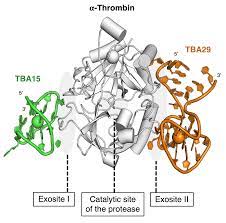
The team developed a DNA-based thrombin inhibitor with a novel method to stop severe bleeding. The drug’s key molecule, called a “bispecific aptamer,” has the unique ability to bind multiple things simultaneously. A short DNA section can also be used to counteract the unwanted clotting effect of HIT. The DNA-based drug allows for more complex behavior than traditional drugs based on more straightforward chemistry. The team’s studies on mice have shown that the treatment is ten times more effective than the best current treatments for HIT. The nucleic-acid-based drug, and its accompanying antidote, do not pass through the placenta into the fetus. The DNA molecules are too big to penetrate the placenta barrier.
Yoshimoto, who has worked in biochemistry and molecular science and specialized in the MACE(r)-SELEX method for selecting aptamers (short sections of DNA that are useful in medicine), inspired this research. He worked with Assistant Professor Asuka Sakata, a thrombosis biologist at Nara Medical University, Japan, to use Yoshimoto’s ideas to resolve medical issues raised by Sakata’s research.
Yoshimoto said, “We are hoping to begin human trials as soon as possible.” It will take two years to finish preclinical trials and five years to finish clinical trials on humans. Although the number of HIT patients is small, we must act quickly.