NASA’s Artemis III will send the first astronauts (the first woman and the first person of color) to the moon’s surface in 2025. This is the first landing on the Moon since the Apollo Era ended more than fifty years ago.
As per the Artemis Accords, they will be joined by other space agencies that will send Europeans, Canadians, Japanese, and astronauts from other countries to the surface of the Moon. They will be quickly followed by taikonauts from China, cosmonauts from Russia, and vyomanauts from India, who will carry out similar lucrative research and exploration.
The presence of facilities on the Moon’s orbit, such as the Artemis Base Camp and the International Lunar Research Station (among others), will allow for all kinds of scientific research, which is impossible to conduct on Earth or from Earth orbit.
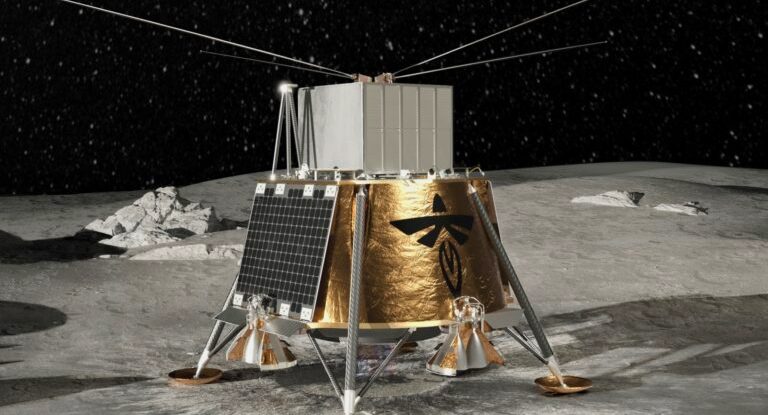
Radio astronomy is one of these projects, as it would be free from terrestrial interference and sensitive enough for the detection of light from previously unknown cosmological periods. The Lunar Surface Electrical Experiment-Night project (LuSEE Night) will be a trailblazer that leaves for the Moon in the coming year and spends the next 18 months listening to the Universe!
Astronomers have not been able to study the ” dark ages ” of the Universe for a very long time. This corresponds with a period that began approximately 380,000 years after the Big Bang. The Universe was then filled with neutral hydrogen, from which the Universe’s first stars and galaxies formed.
After the Big Bang, the first stars of the Population III gradually formed galaxies. Their radiation ionized neutral hydrogen and led to a period called Cosmic Dawn or Epochs of Reionization.
The Universe became transparent to light and, therefore, visible to us today. Astronomers are interested in the Dark Ages because this is when the first galaxies and stars formed.
The only light sources during this period were the relics of the Big Bang visible today as Cosmic Microwave Background and the photons that were released when the first neutral hydrogen molecules formed and settled in stable states. Recombination and Decoupling).
This light can only be seen today as the spectrum line created by a shift in the energy of neutral hydrogen. It is also known as the “hydrogen-line” or the 21cm line.
The atmosphere reflects, absorbs, and refracts radio signals, making it impossible to measure this line from Earth. Radio signals that travel this far in space and time would also be overwhelmed by radio interference from our terrestrial sources, such as electronic devices, communication satellites, broadcast towers, etc.
The Moon is a great shield that blocks out the radio waves from Earth. On the other side of the Moon, the conditions are “radio-quiet” and devoid of terrestrial interference, allowing sensitive radio antennas to detect radiation from an ancient era.
Last but not least, radio antennas could collect data during the lunar night (which lasts for two weeks) when radio waves from the Sun will not interfere.
Multiple proposals for the construction of lunar radio observatories have been made in anticipation of several missions to be undertaken on the Moon over the next few years.
The LuSEE Night project is a collaborative effort between NASA and the Department of Energy, with partners from Lawrence Berkeley National Laboratory and Brookhaven National Laboratory.
Berkeley Lab is building the antenna for the experiment, which will listen out to space and detect radiowaves from the Dark Ages. The investigation will launch on the Moon in 2025, where it will test the technology within the lunar environment.
The extreme conditions will present many challenges to lunar radio observatories. They will enjoy many advantages over Earth-based facilities. The extreme temperature differences between night and day in the southern polar region of the Moon, lasting for two weeks, are one example.
The temperature can rise to 120 degrees during a lunar night before plummeting at night to -173 (-280) degrees. Direct communication is not possible because the far side of the Moon does not face Earth. All data must, therefore, be transmitted through a relay satellite.
LuSEE Night will use two antenna pairs that are six meters (20 ft.) long from tip to tip. The antennas can be coiled to fit into a payload fairing that measures just one meter on all four sides.
LuSEE Night will uncoil the system once it reaches the surface of the Moon using a spring-loaded “stacer.” The Berkeley Lab team prepared the plan for transportation by using simulations and models and then created a 1/100-scale model of the experiment, which was tested on the roof of one of the Lab’s buildings.
Berkeley Lab is also working on a turntable to rotate the antennas periodically in order to compensate for radio noises from other galaxies and planets.
The team has completed a review of the technical aspects this summer. They are now working with UC Berkeley Space Science Laboratory on the construction of the flight model, which will be heading to the Moon. The team hopes to finish the antenna subsystem by January 2024 and integrate it with other components.