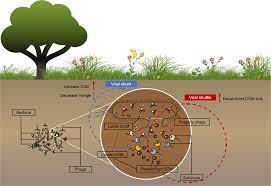
According to a study from the University of California at Davis, published in Nature Ecology and Evolution on September 28, viruses in soil might not be as harmful to bacteria as previously thought. Instead, they could act as lawnmowers by removing older cells and creating space for new growth.
It is difficult to understand how viruses, such as bacteria, affect ecosystems because they are so complex and constantly changing. The first rain of the year on Mediterranean ecosystems such as California offers a reset and can be observed.
Scientists brought soil samples from four California grasslands back to the lab, where they simulated rain by watering them. This grew microorganisms, viruses, and bacteria. The scientists tracked the changes for ten days.
Joanne B. Emerson is an associate professor at UC Davis and the corresponding author of this paper. She said, “Viruses were abundant in soil but we did not know if they were doing anything.” This level of extreme dynamic has never been seen before.
Viruses are not as deadly as previously thought.
Researchers found that viral compositions were diverse and had changed so much that only 15 percent of virus types remained the same from the start of the experiment to the end. The bacteria were much less likely to change. The viruses attacked the dominant bacteria, but they did not kill it.
Emerson stated that viral communities changed much more quickly than bacterial communities in the same samples. We see massive changes, which we call turnovers, in the viral community composition with time.
Viral infections can alter the composition of bacterial populations, which in turn affects how ecosystems work because bacteria are involved in carbon and nutrient cycling in soil.
Emerson explained that bacteria can have a variety of effects on plant health, ecosystem dynamics, and other things.
This finding indicates that viruses behave in a different way than previously thought. It could also lead to better soil dynamics, especially when it comes to bacteria.
Emerson suggested that instead of viruses destroying everything, they could do a gentle culling.
All patterns are available.
The study found that the viruses behaved similarly across all four grasslands despite their different compositions or origins. This indicates that the viral patterns are similar despite their differences.
Emerson stated that “the much greater change in viral types compared to bacteria over time suggests we may have been measuring bacteria incorrectly.”
Christian Santos Medellin is the lead author of this paper. He was a researcher at UC Davis and now works at Corteva Agriscience. The research was conducted by researchers from Lawrence Livermore National Laboratory (LLNL), UC Berkeley, and UC Merced.