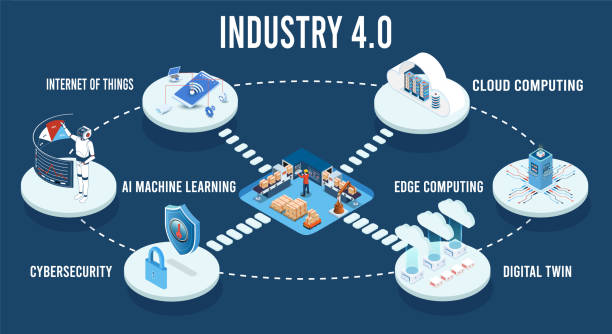
Digital twins will revolutionize discrete manufacturing by reducing costs and extending the life expectancy of assets and equipment. Digital twins are not new, but their use throughout the entire product lifecycle may be. Gartner says that digital twins will be a Top 10 Strategic Trend for 2017 due to their ability to enable disruptive IoT Solutions. IDC estimates that companies will invest $2.1 billion a year in digital transformation by 2019. Analysts predict that manufacturers who implement IoT will reap huge financial rewards. McKinsey predicts, for instance, an economic value of up to $ 11.1 trillion annually by 2025. Product innovation, process innovations, and new business models are the most effective ways to realize benefits. This disruptive innovation is only possible with digital twins.
Digital twins optimize performance and reduce costs
A digital twin represents a virtual version of an actual product or asset. This virtual representation goes beyond a simple model of the object. The twin can receive real-time, continuous data from the physical object thanks to IoT sensors. The unique correspondence allows for virtual monitoring of the thing. Digital twins can improve situational awareness and enable CIOs and other IT professionals to simulate future scenarios to enhance asset performance or anticipate maintenance issues.
Digital twins can now be used to monitor the performance, efficiency, and quality of a manufacturer’s assets, such as machines, lines, or plants. By applying advanced visualization, IoT, and analytics to these assets, manufacturers can adopt a strategic and holistic asset management approach. Digital twins are a huge opportunity for manufacturers in engineering, design customization, and production, as well as operations.
Four digital twin applications for manufacturing
Here are four ways that smart manufacturers can leverage digital twins in order to create a model-based and product-centric enterprise.
Engineering
In the past, engineers have used digital twins as virtual representations when designing and improving products. In this case, the digital counterpart exists even before the physical one and is essentially a vision of what the outcome could be. IoT innovations make it possible to collect data from developments in the field. These data can then be used to improve the digital twin of a product.
Design Customization
Digital twins allow engineering and design to model various variations of products as consumers demand more customized items. Manufacturers have been struggling with how to integrate customer input into manufacturing processes. Digital twins make it easier for manufacturers to respond to customer needs and incorporate usage data, which will improve customization options.
Imagine for a second that your company sells custom high-end bikes. Customers can select different colors, wheel sizes, and other specifications. Your business can generate a more complete picture of the customer demand trends by capturing customer preferences into the digital twin. By capturing data on customer usage, you will be able better to understand the impact of custom configurations on product performance. It allows you to provide the most reliable products and also allows customers to customize their products according to performance attributes. Your business will also be able to visualize lightweight versions of the twins without having to rely on heavyweight design systems or parameters.
Production
The digital twin will allow manufacturers to have a single version of the truth. Ideally, manufacturers would have a centralized location for a master set of digital twin data. This will allow manufacturers to have a single version of the truth. Combining “in-memory computing” networks with a lightweight model that is change-controlled, manufacturers can analyze and visualize data quickly. Digital twins can be used to compare data on quality across multiple products. This gives manufacturers a deeper understanding of global quality issues and helps them visualize problems against the “single-source truth” model.
Operations
Digital twins are best known for their applications in operations enhancement. The manufacturers create a lightweight model to represent an asset on the ground. The manufacturers then capture data from embedded smart sensors, which gives a better picture of the real-world operating conditions and performance. Manufacturers can simulate real-world requirements for predictive maintenance.
Let’s say, for example, your company manufactures wind turbines. You can use data such as rotor speed and wind speed to predict and understand product performance. This will allow your company to plan maintenance before an important part fails, optimizing uptime while minimizing repair costs.