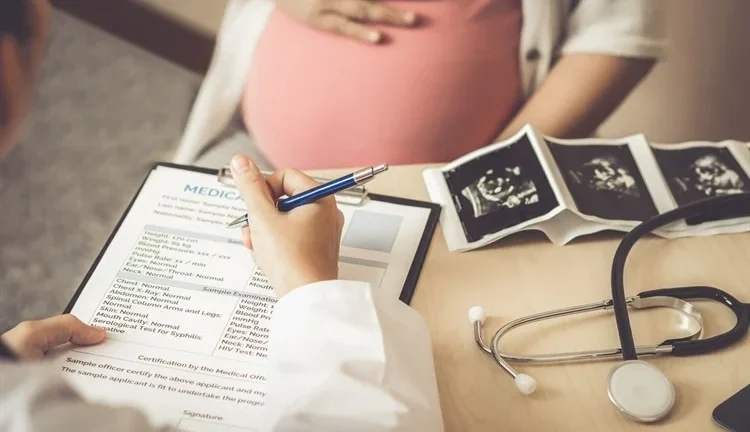
Researchers quantified, in a study published in BMC Medicine, the extent to which obstetrical and neonatal conditions mediate the relationship between the three maternal metabolic disorders: pregestational diabetic mellitus, gestational type 2 diabetes, obesity, and neurodevelopmental conditions in children.
These conditions included autism, intellectual disability (ID), and attention-deficit/hyperactivity disorder (ADHD).
Background
In the last few decades, there has been an increase in cases of PGDM and GDM among mothers, as well as obesity. This is accompanied by the rise in different NDCs, such as ADHD and Autism, particularly among children. However, there is still a lack of understanding about their causes, and the strategies to treat and prevent them are still in their early stages.
Previous studies have demonstrated that shared genetic liabilities increase the risk of NDCs in children who are exposed to abnormal metabolic conditions during pregnancy. Other mechanisms may also be involved.
It would be interesting to evaluate how different obstetrical and neonatal complications affect the relationship between maternal metabolism and children’s NDCs. It would also be interesting to see how PGDM and GDM exposure affects the fetal development of the brain, as these processes follow a natural sequence.
The study
Researchers used Psychiatry Sweden data, a Swedish registry investigating psychiatric conditions, to identify children who were born between January 1, 1997, and December 31, 2010. Researchers used data from Psychiatry Sweden, a Swedish register investigating psychiatric disorders, to identify children born between January 1, 1987, and December 31, 2010.
The team used the International Classification of Diseases 9th and 10th Versions to identify NDCs in the Psychiatry Swedish cohort. They also measured maternal adiposity between weeks 9-10. Nearly 75% had data on the maternal body mass index.
Researchers identified mediators from previous research and then examined whether they influenced the relationship between obesity in mothers and NDCs among children. These complications, such as preeclampsia or eclampsia during pregnancy, placental disorders, and gestational infection, can occur during childbirth, during neonatal periods, or even during pregnancy.
Researchers also included several confounders in their analysis. These include children’s gender, birth year and country of birth, maternal age, psychiatric histories, birth order, and household income during childbirth.
The researchers compared the proportions and mean differences between children whose mother was exposed to PGDM or GDM and those whose mother wasn’t by using a chi-squared test and an analysis of variance.
The researchers also applied parametric regression analyses under a counterfactual frame for single mediator analyses, estimating the effect of diabetes and elevated body mass index on NDCs via individual mediators.
The researchers used bootstrap iterations to estimate standard errors (SEs) based on a weighting method for multiple mediation analysis. They also performed a number of sensitivity analyses in order to determine the biases that may have been introduced into the results.
Results
The results of the study suggested that maternal PGDM was more closely associated with obstetric complications and neonatal problems, including preeclampsia or eclampsia, as well as preterm birth and neonatal suffocation, than maternal GDM.
Moreover, the mediating effects were more important in the neonatal period compared to pregnancy and childbirth. This was especially true for the association between PGDMs and NDCs.
Further, the mediating effects of obstetrical and neonatal complications on the relationship between maternal weight and NDCs were significant. However, they were smaller in size, with a magnitude of less than 10% and less than 5% for each individual and less than 10% for all complications.
Conclusions
The management of neonatal complications could reduce the risk of NDCs for children, particularly in the context of PGDM.
Together, they mediated more than 10% of observed relationships between PGDMs and NDCs. For example, ID was mediated by neonatal asphyxia and hematological comorbidities.
The relationship between maternal GDM, obesity, and NDCs is important.
Moreover, infants at risk of PGDM from mothers who are exposed to it could be protected by timely interventions, such as iron (Fe), within the first month following birth. These neonates also need to be monitored and receive comprehensive care in order to reduce their risk of NDCs.
The study results show that it is important to address the primary metabolic factors of pregnant women, as well as manage any complications during pregnancy, childbirth, or the neonatal phase.