Core Lithium suspended mining at its Finniss Project near Darwin due to “weak market conditions.” Up to half of 300 jobs will be lost at the site.
The following are key points:
- Core Lithium plans to continue processing ore at its Finniss Mine until the middle of 2024
- The suspension is expected to affect up to 50% of the workers in the operation.
- Gareth Manderson, the core chief executive, says that the decision “has no bearing” on the site’s performance.
In late December, it announced a review of its operations in Darwin and that it had suspended the early work on its second mine, BP33. This was due to a drop of 80 percent in the price of spodumene (high-purity lithium ore).
This product is used in the manufacture of lithium-ion battery cells, which are found in many electric vehicles.
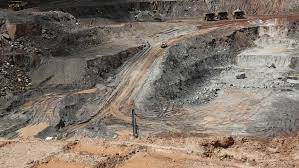
Core Lithium issued an ASX announcement on Friday morning stating that it has temporarily suspended its mining operations at the Grants open pit at Finniss. However, it will continue to process its lithium stockpiles.
The company stated that it has about 280,000 tonnes of ore in stockpiled. This would allow the processing plant to operate until mid-2024 without further mining.
Core stated that the open pit would be maintained to “allow an orderly ramp-up when market conditions improve.”
Gareth Manderson, Core’s chief executive officer, told ABC Country Hour that Core Lithium workers and contractors accounted for just over 300 employees.
He said, “You can expect 40 to 50% of the team to be affected by this.”
We’re still working out the details with our contractors at this time.
Mr. Manderson stated that the job losses are “not something that I take lightly.”
He said that the team had done an excellent job of getting things up and running.
This decision does not affect the performance on site.”
Mr. Manderson stated that the pause would be implemented in a manner that would allow the company to resume operations quickly once the market conditions improve. However, he said it was hard to predict the price for spodumene.
Mr Manderson stated that “no one expected an 80 percent reduction in just 12 months.”
Eva Lawler, NT Chief Minster, said in December that “a glut” of lithium had caused the price of the product to plummet. She expected this would “absolutely be changed in the next couple of years.”
In August, Mr Manderson said that Core Lithium was the target of short sellers this year. He stated that he is focused on “running and building the best possible business.”
The Finniss mine opened early in October 2022, with a lifespan of 12 years.
Core was already supplying electric vehicles to Tesla at the time it opened.
The company later announced that the deal was not going to go ahead. However, it said that the company remained “well positioned” to benefit from the strong global demand for lithium.
The government is confident that Core will resume its operations
Mark Monaghan said today that he is satisfied the Finniss Mine will continue to operate and will resume digging later this year. He cited the prospect of a rebound in the lithium price.
He said: “At the very least, I’d be surprised if the global demand for lithium were to drop.”
“I have no doubt that we will see the world continue to move toward a more renewable future. They need our lithium.”
He continued to say that other mine operators would be welcome if Core’s situation weakened to the point where they were no longer able to operate.
He said: “I’m a big supporter of new mining operations in the area, and will back them up every time they want to achieve their goals in the region.”
He suggested that other mines may be able to take in workers who are made redundant.
He said that “these miners, these technical staff, and these scientists who are all involved in the mining industry are in high-demand.”
Lia Finocchiaro, the leader of the opposition, did not blame the government for the Core being suspended at Finniss but criticized its ability to bring investment into the territory in general.
She said, “It shows that mining is still a major platform for our economy. But we can’t rest on just one new mine. We have to aggressively pursue investment.”
She said that too many approvals from regulatory bodies were affecting infrastructure projects in the NT.
She said, “We have a project in the private sector that is suffering from changes in commodity prices.”
The government should make sure that when projects are launched in the territory, they have the fewest upfront costs and the shortest regulatory timeframes possible.