ASX continues to lose as big banks fall behind
The ASX continues to lose value as the banking industry sheds even more. The four largest banks are now down anywhere between 0.5-0.9%.
The sector of the energy market is the only one in the black. It is up about 0.9%. Everything else is falling.
As of 1:10 pm AEST, only 57 of the 200 largest companies gained, while 136 lost ground.
Investors are waiting to see how the US Debt Ceiling Crisis will play out.
US President Joe Biden and Republican Congressional leaders are expected to meet again overnight (Australian time). They will try to hammer out an agreement to raise the ceiling to prevent default.
UBS US economist warns that share prices could fall by up to 30% if the US government defaults
Hello Mitchell, I received an interesting note from the investment firm UBS. Its US chief economist Jonathan Pingle examines the exact question of what could happen if the US defaults.
Here are a few highlights (or lowlights, if you prefer). Remember, these are only the predictions of economists from one investment bank. They do not represent any financial advice.
UBS has already predicted that the S&P 500 index will drop by 5% in the current quarter (until June 30) and then finish the year at the same level as it is now due to the US going into recession. This is its baseline forecast.
Ouch. UBS says that a 20 percent decline is considered a bear market. Any default will likely push US stocks into one.
Yes, the very thing that just defaulted. UBS’ economics team believes the US will default on the same thing. There are no doubt many other opinions about the exact outcome, but there is a strong consensus among analysts that the US would be in for a highly wild ride if it passes the “X” date without a deal on the debt ceiling.
The federal government proposes the most significant regulatory shake-up ever seen in the short history of the fledgling Buy Now Pay Later (BNPL).
The proposed changes will see BNPL regulated as a product of credit, albeit more lenient than credit cards and loans.
Block was down by -1.6% at $87.75, around 11:15 am AEST.
It may need to change its operations in Australia to meet some credit licensing and checks requirements. However, this market is a small part of BNPL’s global payments footprint.
Humm Group, listed on the ASX, has also welcomed these changes.
Even when America is at the root of the problem, as was the case during the early stages of the global financial crises, the US Dollar often rises in times of turmoil.
Is the problem if it’s the US government, i.e., The dollar’s issuer may not be at fault?
However, The Australian dollar is not usually viewed as a “safe haven” currency because we are heavily exposed to commodity prices highly susceptible to global economic conditions.
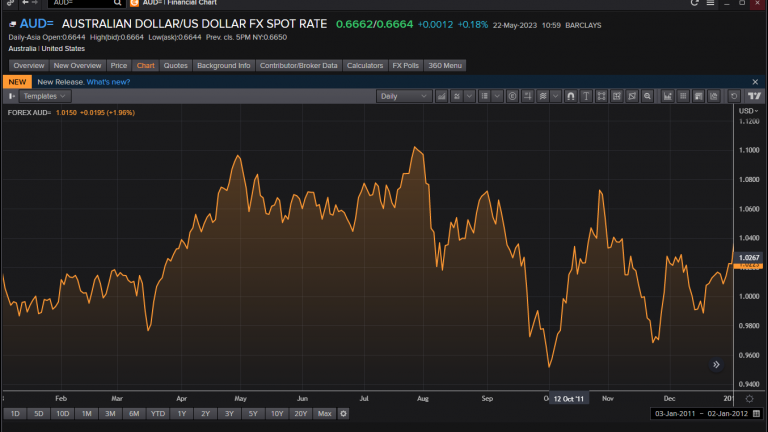
When you compare 2011 to the current situation, the first time that the US was seriously on the verge of defaulting and breaching its debt ceiling, you will see that the Aussie Dollar did not jump dramatically against the US dollar during July when negotiations were stagnant (a deal ended up being reached at the end that month).