Background
Antibacterial peptides are found in a variety of organisms. They have an a-helix, b-fold, or both and contain between 5 and 50 amino acids. ABPs have both hydrophobic ends and hydrophilic ones. ABPs have been shown to target the cytoplasmic surface and remove microbes or cancer cells.
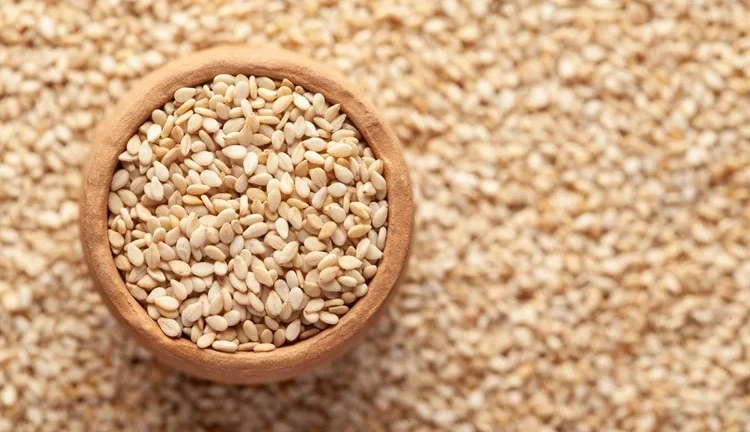
Sesamum Indicum L., or sesame, is a widely cultivated oilseed that contains sesame proteins in the range of 17-40%. In vitro and vivo studies showed that sesame seed peptides exhibited various important therapeutic properties. These included blood lipid reductions, antioxidants, and diabetes resistance.
The study
The present study aimed at identifying sesame-derived peptides that could interact with the active site of dihydropteroate synthase (DHPS), a key enzyme in the folate path.
The bioinformatics tools used were focused on two important sesame proteins: 2S seed-storage protein 1 (Q9XHP1) and 11S globulin-seed storage protein 2(Q9XHP0). The selected AMPs were synthesized in vitro, and their minimal inhibitory concentration (MIC) was measured.
Hydrolysis by a hybrid enzyme can produce more potent peptides compared to hydrolysis performed with a single enzyme. Three proteases that are commonly found in the gastrointestinal system were selected for simultaneous enzyme digestion.
The analysis included peptides containing two to fifteen amino acid residues as well as an evaluation of their toxicity and physicochemical characteristics, as they also evaluated their allergenicity.
Key Findings
The docking screen was performed on non-sensitizing and non-toxic peptides that were positively charged. A higher charge indicates greater antimicrobial activity, both against Gram-positive pathogens and Gram-negative.
Ala-Gly-Gly-Val-Pro-Arg and Ser-Thr-Ile-Arg peptides inhibited the growth of both Gram-positive Staphylococcus aureus and Gram-negative Escherichia coli. The precise amino acid sequences of the two sesame proteins were ascertained using the uniport database. Virtual enzyme digestion was used to obtain 229 endogenous proteins.
Recent studies have identified Trp-Lys as a potent Mycobacterium tuberculosis inhibitor that can bind both to the sulfa-drug-binding region and pteridine-monophosphate. This agent is less susceptible to drug-resistant mutants. Trp-Lys, which has this property, was chosen as a control. Importantly, Ser-Thr-Ile-Arg and Ala-Gly-Gly-Val-Pro-Arg outperformed Trp-Lys, thereby demonstrating their viability as ABPs.
The net positive charge of peptides facilitates their antimicrobial activities, as peptides can react with bacterial membrane membrane phospholipids that are oppositely charged, leading to increased membrane permeability and cell death.
In previous studies, the association between ABP charge and antimicrobial activity was clarified. ABPs that have a positive net charge are attracted by electrostatic attraction to negatively-charged microbial membranes but not the neutrally-charged membranes of mammalian cells.
The positive charges on AlaGly-Gly-Val-Pro-Arg and Ser-Thr-Ile-Arg peptides could be due to the presence of the Arg amino acid. According to previous studies, the antibacterial activity of peptides is increased as the number of arginine-containing residues increases.
ABPs are also hydrophobic. The microbial cell membrane is composed of a hydrophobic lipid bilayer, which enhances the interaction between phospholipid membranes.
In Ala-Gly-Gly-Val-Pro-Arg and Ser-Thr-Ile-Arg, hydrophobic amino-acid residues of Ile, Ala, and Pro are present, enhancing the peptide’s inhibitory activity.
Conclusions
The computational screening tools can help to detect peptides that have antimicrobial properties more accurately. In the current study, two AMPs of AlaGly-Gly-Val-Pro-Arg and Ser-Thr-Ile-Arg were screened and synthesized, both of which are non-toxic, stable, and non-allergenic. The peptides are derived from sesame seed, which provides ample potential for future research and development.
In vitro tests confirmed the antibacterial properties. Several factors influenced the interaction between sesame peptides and DHPS. These included hydrophobic interactions and hydrogen bonds, as well as attractive charge interaction force and van der Waals force. Utilizing either AlaGly-Gly-Val-Pro-Arg or Ser-Thr-Ile-Arg led to the suppression of both E. coli and E. aureus.