Have they ever wondered why some people don’t get sick with COVID-19? The study, published in Nature Today, shows that genetic variations are responsible for the asymptomatic SARS-CoV-2 infection. These results indicate that people with this variant do not feel sick after illness. This discovery resulted from a U.S. and Australian collaborative work led by Danillo Augusto, Ph.D. assistant professor, University of North Carolina, Charlotte; Jill Hollenbach, Ph.D. professor, University of California, San Francisco; and Stephanie Gras, professor, La Trobe University, Australia.
The study is focused on a set of genes known as human leukocyte antigens (HLA). Your immune system uses these HLA gene codes to distinguish between healthy and infected cells. HLA is an essential system for immune response, but also highly variable among individuals. The role of HLAs is to fight infection. Researchers wondered if specific HLA variants would make us more susceptible or protected from SARS-CoV-2.
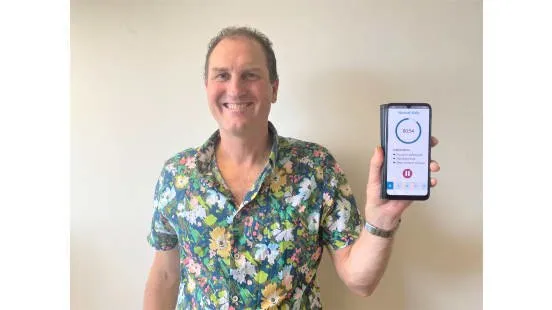
Hollenbach was in charge of data collection that began at the pandemic’s start. First, 29947 unvaccinated people were screened using a mobile application to track COVID-19 symptomatology. One thousand four hundred twenty-eight of them reported upbeat results for the virus. All individuals’ DNA was sequenced to determine their HLA genes. Researchers found that people with the genetic variant HLA B*15:01 are more likely to be asymptomatic following infection. This variant is found in 10% of the population, which is impressive. Individuals with HLA-B*1501 on their genome were not immune to disease but did not get sick.
HLA molecules allow immune effector cells to inspect pieces of the virus. The cells used in the study were from people with HLA B*15:01 who had donated blood a few years before the pandemic. These individuals were found to have memory T cells that were directed against a particle of SARS-CoV-2. Individuals who had never been exposed to SARS CoV-2 had developed an immunological memory for a SARS CoV-2 particle. The immunological memory of these individuals would have triggered a faster response, explaining why they remained asymptomatic. It was still intriguing that they developed immunological memory for SARS-CoV-2 even though they had never been exposed to it.
“It’s well-known that coronaviruses of other types have been causing seasonal colds for years.” We hypothesized these individuals had been exposed to seasonal coronaviruses and that individuals with HLA-B*15:01 could quickly kill SARS-CoV-2 infected cells due to cross-reactive immune responses. Even if bad guys change their uniforms, the army can still identify them by their shoes or a tattoo. After carefully analyzing all the coronavirus genome sequences, the study revealed that the SARS-CoV-2 particles recognized by HLA B*15:01 among unexposed individuals are similar to other viral particles of previous coronaviruses. Using crystal structures and affinity tests, the research showed that T cells of pre-pandemic people could detect viral particles from previous coronaviruses and SARS-CoV-2. The individuals had developed an immunological memory of previous coronaviruses. However, due to the similarity between the viral particles, the memory T cells of those individuals can recognize and kill SARS-CoV-2 quickly. The findings show how people can avoid getting sick from SARS-CoV-2. The research group will continue learning about the response to this virus to understand COVID-19 therapeutics and vaccines better.