Researchers from Canada published a study in Cancer Discovery that tested the use of multimodal liquid biopsies based on cfDNA for early cancer detection among patients with Li-Fraumeni Syndrome.
Researchers found that this assay had a higher sensitivity for detection compared to other unimodal tests. It could also detect signals related to cancer before conventional cancer diagnosis.
Background
Li-Fraumeni Syndrome (LFS) occurs when the tumor suppressor TP53 (also known as tumor protein 53) has germline mutations. This condition increases the risk of the carrier developing cancer by up to 100%.
A high cancer risk requires frequent surveillance, including diagnostic tests, examinations, and imaging. There are many physical, financial, mental, and logistical barriers to intensive monitoring of LFS patients.
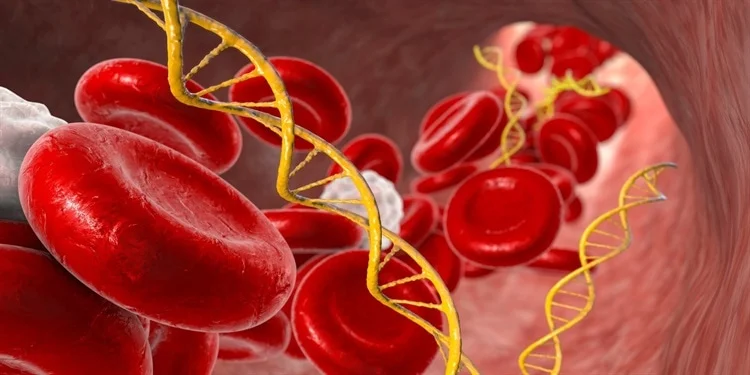
The liquid biopsy is a promising, less invasive method that can detect cancer-related DNA signatures in blood samples.
Researchers in this study developed a multimodal cfDNA-based approach to detect cancer-related signals among patients. This was done in response to the lack of data regarding the use of cfDNA for high-cancer risk groups, such as LFS.
The study
The present study collected 193 venous samples (154 cancer-negative and 39 cancer-positive) from 89 people with a TP53 (TP53m) in the age range 1-67 years.
Carriers were divided into three groups: those without cancer (LFS – H, n=42), cancer survivors (LFS – PC, n=21), or those with active cancers (LFS – AC, n=26). Around 18 TP53m carriers were “phenoconverters,” which switched from cancer-negative to cancer-positive or multiple cancers.
The median follow-up clinical period was 48.1 months. The present cohort of TP53m carriers had a higher breast cancer prevalence than other types, in line with previous literature.
Blood samples were used to extract DNA and peripheral blood mononuclear (PBMC) cells. PBMCs were used to extract genomic DNA, and DNA libraries for shallow whole genome (sWGS), target panel sequencing, and cell-free methylated DNA immunoprecipitation (cfMeDIP) sequencing were created.
For targeted sequencing and cell-free analysis of methylomes, bioinformatics tools like ConsensusCruncher and the Genome Analysis Toolkit were used.
The ctDNA metrics determined included somatic TP53m, copy number, tumor fraction, genome-wide segmentation score TP53, and pan-cancer score methylation. Estimated were the sensitivity and specificity of both individual and integrated tests.
Discussion and results
Comparing TP53m carriers to healthy controls, the proportion of DNA fragments (150bps) is higher. This percentage increases in TP53m carriers compared with cancer-negative ones.
The integration of fragmentomic and epigenomic analysis of 38 cancer-positive samples resulted in the detection of a cancer-associated signal in 81.6%, which is a significant improvement over unimodal studies.
Early-stage samples showed a greater improvement in detection than late-stage samples. Only 2 of 57 examples were found to have a false negative rate. The false positive rate within the pieces was 18.3%.
The negative predictive value of cancer-free T53m carriers was 95.4%. This is an improvement between 16.6 and 34.6% compared to unimodal analysis. In 35.6% of patients, a cancer-related signal was detected at an early stage of cancer. A focused follow-up, however, is required to determine which false positives are among them.
Multimodal analysis of individual LFS cases was found to be just as sensitive or even more so than conventional clinical screening methods. According to the study, cfDA-based cancer diagnosis can be used in conjunction with existing cancer management and diagnostic modalities, particularly for high-risk groups.
These integrated tests may be more invasive, but they are less intrusive. This could allow for increased testing frequencies among patients at high risk. The study’s retrospective design is limited, as well as the low adoption of cfMeDIP in clinical settings when compared with TS and SWGS.
For improved outcomes, further research is needed to validate the cfDNA method for LFS patients.
The conclusion of the article is:
The integrated cfDNA method used in this study has shown earlier cancer detection among LFS patients with better sensitivity compared to traditional imaging.
Multimodal screening, in combination with accessible assays, could increase the sensitivity and specificity of cancer detection, allowing for optimal care of patients at high risk of developing cancer.