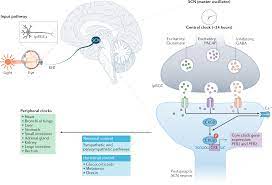
Our cells contain cellular clocks that synchronize us with the night-day cycle, signal our sleepiness and alertness, and control our daily processes. Scientists who study the molecular mechanisms that control our biological clocks have now identified a pivotal event that controls the clock’s timing.
The findings published in Molecular Cell on May 18 reveal details about the molecular interaction disrupted by people with an inherited sleep disorder called Familial Advanced Sleep Phase Syndrome (FASP). The syndrome is caused by a genetic mutation that shortens the clock. This causes people to be extreme “morning loons” as their internal clocks are not synchronized with our 24-hour planet-wide cycle.
Carrie Partch is a professor of chemistry, biochemistry, and UC Santa Cruz. She was the corresponding author. The FASP mutation, discovered in 1998, significantly impacted the body, but it was unclear how or why.
The FASP mutation changes a single amino acid in the structure of Period, one of the clock proteins. This new study shows that this single change disrupts the Period’s interactions (with kinase) with an enzyme called casein kinase 1, decreasing its stability and shortening a critical step in the clock cycle.
Jonathan Philpott is the first author and a postdoctoral research scientist in Partch’s laboratory at UCSC. He explained that kinase regulates the Period by attaching phosphates (a process known as phosphorylation), which it can do on two different parts of a protein. The “degron region” is phosphorylated to mark the Period protein as a degradation target, while the FASP region is phosphorylated to stabilize it. The balance between stabilization and degradation determines the clock cycle’s length. The FASP mutation shifts this balance in favor of degradation, resulting in a shorter process.
The new study has found that the phosphorylated FASP inhibits the activity of the kinase. This feedback inhibition allows the Period to regulate its regulator by slowing phosphorylation and lengthening the cycle. Partch stated, “We need this pause to slow down biochemistry which would otherwise be very rapid.”
Researchers found that inhibition is caused by the binding of phosphorylated FASP to a specific site on the kinase. This site could be targeted with a drug.
Philpott stated, “We can begin to think of this as a tunable system.” “We have identified regions of the kinase which are potentially targetable to tune its activities for therapeutic applications.”
Partch pointed out that most drugs that target kinases block the active site. She said, “It’s a hammer to turn off the kinase.” “But now that we have discovered new pockets specific to this kinase activity, we can modulate it in a controlled manner.
This can help people suffering from Familial Advanced Sleep Phase Syndrome and those whose sleep cycles are disrupted due to jet lag, shift work, and other modern challenges.
The new study also found that fruit flies are affected by this feedback inhibition, although the phosphorylation site is different.
Partch stated, “It turns out that the short-cycle mutant discovered in Drosophila in 1970 does the same as the short-cycle FASP mutation found in humans.” This mechanism is likely to have been present throughout the evolution of multicellular animals. It’s a fundamental part of biological clocks in Earth’s 24-hour cycle.
Partch and Philpott say that their collaborations with other labs allowed them to look at the clock mechanisms from various angles beyond just their experimental observations. The study involved the use of NMR, simulations of molecular dynamics, and genetically modified human cell lines. It also included characterizing these molecular mechanisms in humans and Drosophila fruit flies.
Partch stated, “It was an excellent team that worked together.”
The coauthors of the study include, in addition to Philpott, David Virshup and Rajesh Narasimamurthy at Duke-NUS Medical School, Singapore, as well as Yao Cai, Joanna Chiu, and Andrew McCammon from UC San Diego. The U.S. National Institutes of Health funded this work, as did the Singapore Ministry of Health.