Researchers at the UCLA Jonsson Comprehensive Cancer Center, Department of Urology, and UCLA Jonsson Cancer Center have developed a model that uses artificial intelligence to help determine the extent of prostate cancer.
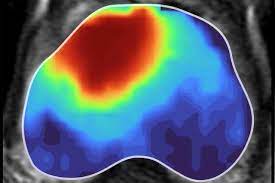
The AI model is better at predicting the margins of tumors than Magnetic Resonance Imaging (MRI). This could improve the effectiveness of the focal therapy and standardize the treatment margin definition. It may also reduce the risk of cancer recurrence.
BACKGROUND
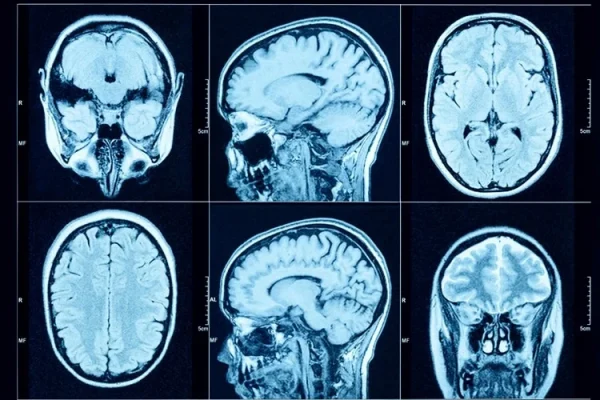
Patients with intermediate-risk prostate cancer can receive focal therapy, a minimally-invasive treatment method for localized tumors. Imaging guidance such as MRI is used to locate the cancer accurately and guide treatment. Real-time imaging allows for monitoring the treatment progress and ensuring the energy is delivered to the correct area.
Current methods can, however, underestimate the extent and severity of prostate cancer. This complicates the definition of focal treatment boundaries. AI can better define these margins than MRI, vital for accurate diagnosis, treatment planning, and effective surgical procedures.
METHOD
In collaboration with Avenda Health scientists, the team used biopsies from several institutions to train the Unfold-AI AI model to determine margins during focal treatment. The Stanford University School of Medicine tested the model on an independent dataset of fifty patients who underwent radical prostatectomy to treat intermediate-risk cancer. The AI model proved more accurate and efficient than traditional methods for predicting tumor boundaries.
IMPACT
This advancement results from the research that Dr. Leonard Marks initiated in 2009. He was a UCLA’s David Geffen School of Medicine professor and detention Chair in Urology. The software can help predict prostate extension, improve radiation therapy, and enhance the results of focal prostate ablation.
NBC News highlighted Unfold-AI in conjunction with President Biden’s AI Summit earlier this month.
Journal
The European Urology Open Science journal has published the study.
AUTHORS
Alan Priester is the first author of the study. He is a Ph.D. assistant project scientist at the David Geffen School of Medicine at UCLA. Geoffrey Sonn, a Stanford University School of Medicine professor, is the senior author of this study. Marks, Shyam Natarajan, and Marks are also UCLA authors.
Funding
The National Cancer Institute, R01CA218547, partially supported this research.
COI
Marks and Natarajan founded Avenda Health. Priester and Shubert work for Avenda Health.