Western Australia’s environmental watchdog could scrutinize US mining giant Alcoa for the first time, following concerns that their operations may impact Perth’s water supply.
The Environmental Protection Authority (EPA), which is usually assessed behind closed-door by the state government, will review the Mining Management Plan for the first time since the company has been operating in the state.
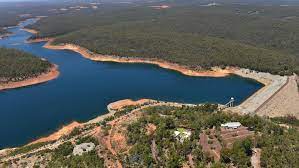
Alcoa’s Jarrahdale bauxite mining is located near the Serpentine water catchment, which provided 18% of Perth’s essential drinking water last financial year.
The EPA deemed today that a referral from the environmental lobby group WA Forest Alliance was “partially valid.”
The “valid” decision means that the EPA will spend the following week asking the public if it should evaluate parts of Alcoa’s mining footprint before deciding if it will proceed.
Behind closed Doors
Alcoa operates in the northern Jarrah forests of WA under the Alumina Refinery Agreement of 1962, which allows the company to bypass the state’s environmental regulator.
The Ministry of State Development approves the final plan after it is submitted to the Mining and Management Program Liaison Group, a group of bureaucrats from state governments.
The process is managed by the department that is responsible for encouraging industry. It is done behind closed doors, with no consultation of the public other than a small group of landowners or government departments.
Matt Reed, president of Alcoa Australia, said the alumina firm sought a smooth transition to the EPA process.
He said: “There needs to be a transition period where we can continue to collaborate with regulators and stakeholders to meet the evolving expectations and requirements.”
Roger Cook, the Premier of WA and Minister for State Development has been contacted to provide a comment.
Concerns about drinking water
The MMPLG has refused to approve new mining plans in the Serpentine Basin for the past two years due to concerns that the company was operating dangerously near Perth’s drinking-water supply.
Water Corporation asked Alcoa to stop mining near Serpentine Dam in August 2021. Water bodies are only 100 meters from mining operations.
The city expressed concerns about the possibility of toxic runoff entering the dam, which supplied 18% of its water last year.
According to the state government, Mark McGowan, the then premier, met with Alcoa executives earlier this year to “make it clear to the company that the risks to catchment waters need to be managed appropriately.”
A spokesperson for the state government said that “Alcoa’s plan was approved under strict conditions. These included a requirement to not mine in certain higher-risk areas before submitting a revised plan of risk management that addressed adequately the concerns raised by government.”
Alcoa does not mine in these areas and has not addressed the concerns.
Alcoa is proud of its environmental record.
Jess Beckerling, campaign director for the WA Forest Alliance, hoped this decision would lead to a better environment.
She said, “Alcoa has been hiding behind a secretive process of approval for decades, but now, the huge impacts the company has on forests and the risk it poses to the drinking water can be subjected to a public and full environmental review.”
“It is essential that the EPA conducts the most rigorous assessment and that it leads to forest, wildlife protection, water protection, public health, and climate change protection.”
In a Monday morning statement, Reed sought to allay concerns over the effects on drinking water.
He said: “We’re increasing controls to protect the drinking water. We’re stepping up mine-site rehabilitation. And we’re enhancing management of social impact, including the recently announced no-mining zones around Dwellingup and Jarrahdale.”
We are proud of the environmental record we have achieved and our economic and social contribution to WA in the last 60+ years. We can continue operating safely and responsibly.
He said Alcoa was happy to be involved and that it was proof of the miner’s modernization of its approval framework.
Alcoa’s bottom line was affected.
Alcoa CEO Roy Harvey told investors last month that delays in state government approvals had cost Alcoa $66 million.
He said, “to give this complex regulatory procedure the time it deserves, we now mine lower-grade bauxite from previously approved areas.”
It is expensive to use lower-grade bauxite. It requires more raw materials and produces less alumina for each tonne of bauxite.
He stated that there is no “fixed timetable” for addressing regulatory concerns and that the state agreement process provides “appropriate social and environmental protections.”
After the meeting, the company’s shares fell by six percent. However, they have since recovered.
The mining of lower-grade bauxite, the raw material for alumina, has forced the miner into a more water-intensive operation.