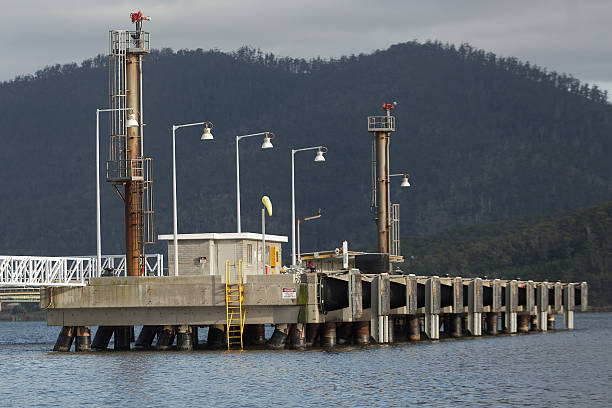
Australia, known for its vast landscapes and abundant natural resources, has long been a player in the global helium market. However, recent developments have brought this thriving industry to an unexpected standstill. The cessation of helium production in Australia is a consequence of the depletion of gas supplies crucial for the operation of the Santos helium extraction plant in Darwin.
The Santos helium extraction plant, located in the Northern Territory, had been a key player in the nation’s helium production landscape. Helium, a non-renewable resource, is critical for a range of applications, including medical equipment, aerospace technology, and research purposes. The sudden halt in production is expected to have significant ramifications not only for Australia’s economy but also for global helium markets.
The Darwin plant, operated by Santos, was a major contributor to the global helium supply chain. The company had successfully extracted helium from natural gas reservoirs in the region for several years. However, the recent exhaustion of the gas supply that contained helium has forced Santos to cease its helium production operations.
The depletion of the gas supply can be traced back to a combination of factors, including changes in the natural gas reservoirs and increased demand for natural gas in the region. As a result, the concentration of helium in the available gas reservoirs dropped below economically viable levels, rendering the extraction process impractical.
Santos, a leading energy company in Australia, had invested heavily in the helium extraction plant, anticipating a steady supply of natural gas containing helium. The sudden end of production has not only led to financial losses for the company but has also raised concerns about the future availability of helium in the global market.
Helium, often dubbed the “invisible gas,” is a critical component in various industries. In the medical field, it is essential for MRI machines and cryogenics. The aerospace sector relies on helium for applications such as rocket propulsion and satellite technology. Additionally, helium is used in research environments, particularly in cryogenic experiments and as a coolant in certain scientific instruments.
The interruption in helium production has led to a surge in demand, with global helium prices experiencing a noticeable spike. Countries that heavily relied on Australian helium are now seeking alternative sources, putting pressure on existing helium-producing nations to increase their output.
Experts warn that the shortage could have cascading effects on various industries, potentially disrupting the supply chain for critical technologies and applications. The medical community, in particular, is closely monitoring the situation as any prolonged shortage of helium could impact the availability and functionality of medical equipment essential for diagnosis and treatment.
The Australian government is also closely monitoring the situation and is considering measures to address the helium shortage. This includes exploring the possibility of incentivizing the discovery of new helium reservoirs or supporting research into alternative helium extraction methods.
The Santos helium extraction plant closure raises broader questions about the sustainability of helium production and the global helium market. As helium is a finite resource and demand continues to rise, there is an urgent need for research and investment in new extraction technologies and exploration for untapped helium reservoirs.
In conclusion, the cessation of helium production in Australia marks a significant turning point for the global helium market. The depletion of gas supplies at the Santos helium extraction plant in Darwin has immediate economic implications for the nation and repercussions throughout the world. The shortage underscores the importance of developing sustainable practices and alternative sources to meet the growing global demand for this invaluable resource.