Our society is filled with synthetic polymers, from nylon and Polyester clothing to Teflon cooking ware and epoxy adhesive. These polymers are composed of long monomer chains, which increase the functionality of many materials.
Peng Chen is the Peter J.W. Debye Professor of Chemistry at the College of Arts and Sciences. Scientists have been unable to sequence synthetic copolymers until now, despite the fact that monomer sequence is critical for a material’s property.
Chen and his colleagues developed CREATS, which allows them to image polymerization reactions with single monomer resolution. They can also differentiate monomers using fluorescent signaling. These are both important steps to discovering the molecular makeup of a synthesized polymer.
The researchers describe their technique and the discoveries they have made using it in the article ” Optically Sequencing Single Synthetic Polymers,” published in Nature Chemistry on Nov. 9.
Rong Ye is the co-lead author, along with Xiangcheng Sun and Xianwen Mao, who are all former postdoctoral researchers in Chen’s group. Former Chen group postdoctoral researchers Susil and Chunming Liu are co-authors, as well as Felix Alfonso and Geoffrey Coates.
“Synthetic polymers consist of monomer units that are linked like beads,” Chen explained. The monomers in the simplest polymers are identical. However, copolymers contain different monomers and have more complex properties. The exact arrangement of monomers within a copolymer is important for its properties, such as stiffness and flexibility.
Chen explained that sequence also plays a part in the properties and characteristics of natural polymers. A protein is composed of 20 monomers of amino acids arranged in an extremely specific sequence.
Chen explained that “in a natural polymer nature is in control.” “In synthetic polymers the chemists are not in control of the exact arrangement.”
Chen explained that the heterogeneity of synthetic polymers is a major reason why it’s so hard to sequence copolymers. The individual chains vary in length, composition, and sequence. This requires single-polymer methods that can identify and resolve individual monomers.
Chen explained that some modern methods can be used to control the order of monomers within a polymer chain. However, this is only possible for short polymers, between 10 and 20 monomers.
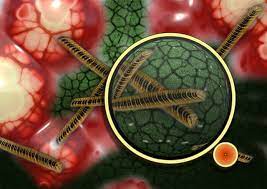
Researchers can use CREATS to determine the sequence in which a polymer is formed, monomer by monomer, as they add each monomer. To make monomers visible, the CREATS system couples the polymerization with a second reaction that creates fluorescent signals.
Chen explained that every monomer that is injected emits a puff. The laser induces the light, which has a specific color. In our case, it is either yellow or green. “By observing whether the monomer is yellow or green we can tell what monomer it contains.”
The lab has already been equipped with the tools to measure polymer properties. The next step, after determining the sequence of a polymer, is to combine both experiments in order to correlate structure with function. This will provide guiding principles to polymer designers to achieve specific properties.
Chen explained that if you understand how sequence affects property, you could design any line to achieve the desired property. This knowledge can help people customize their materials for a specific application.
The Polymer Chemistry Program of the Army Research Office is a Directorate of the U.S. Army Combat Capabilities Development Command Army Research Laboratory.