Six people in Australia are diagnosed daily with brain tumors, and four will die. Therefore, services to improve the quality of life and well-being of individuals and their family members are essential.
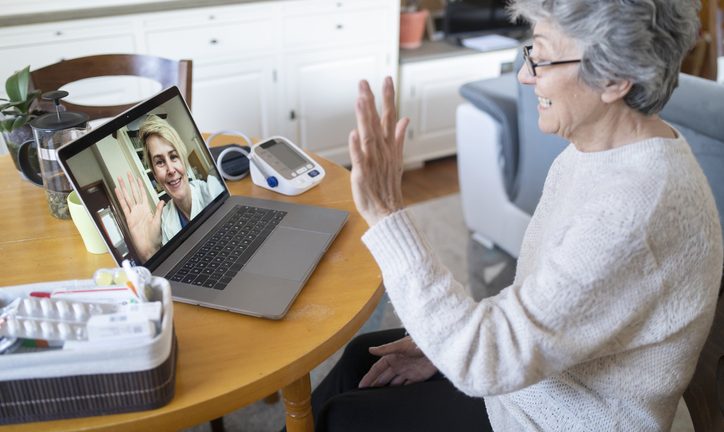
Two Griffith University research studies show the positive impact of telehealth Making Sense of Brain Tumour initiative (TeleMAST). The 10-session videoconferencing programs decrease depression and anxiety and potentially reduce the financial burden on the healthcare system.
After 16 years of development, the Tele-MAST Program, which aims to improve the quality of survivorship and psychological well-being, is now being rolled out nationwide.
Professor Tamara Ownsworth, a clinical neuropsychologist at the Griffith School of Applied Psychology and Director of Research of The Hopkins Centre of Menzies Health Institute of Queensland, said that people with brain tumors experience various side effects, including epilepsy and severe fatigue. They also suffer from confusion and distress, leading to social exclusion and depression.
Professor Ownsworth stated that participants of the Tele-MAST Program were four times as likely to be less depressed and reported a significant reduction in anxiety and an improved quality of life compared to people who received standard care (telephone-based counseling).
As part of this research, we evaluated the cost-effectiveness or “value for money” of telehealth interventions by comparing inputs and outcomes of the intervention to standard care.
We collected data on the resources used to deliver the interventions and the uptake of the psychological services and observed the improvement in participants’ well-being.
According to Professor Louisa Gordon, a health economist at the QIMR Berghofer Medical Research Institute who performed the health economics analysis, this intervention was efficient and a good investment in health services.
Professor Gordon stated that the Tele-MAST was a cost-effective way to improve people’s mental health with brain tumors in Australia.
According to Professor Ownsworth, research conducted in the past on brain tumors and psychological support found that these needs are often neglected during treatment.
Professor Ownsworth stated, “Being diagnosed and treated for brain tumors can be a stressful experience. Many people struggle to understand their illness and are uncertain and concerned about the future.”
The studies aim to understand the disease on a cellular scale, for example, laboratory-based research that seeks to determine the best way to stop the growth of tumors.
Julia Robertson, a Griffith Master of Global Health Student and Disability and Inclusion Ambassador and Advocate, was diagnosed with brain cancer in 2003.
Ms. Robertson created a resource as part of her Community Internship that helped patients understand how to use Zoom. This resource was a valuable addition to the Tele-MAST Program.
She described her diagnosis as an emotional roller coaster that made her feel alone.
“Among other symptoms, I suffered from severe memory loss,” said Ms Robertson.
“I had forgotten how to do simple math. I needed to retrain and retrain my brain in order to learn new things and retain them.”
“I wanted to make people’s lives a little bit easier who have a brain tumor.
Ms. Robertson was diagnosed with a brain tumor in 2003. In 2011, she had a stroke and underwent brain surgery. She enrolled in TAFE in 2012, and in 2014, she began studying for a Bachelor of Science at Griffith University. In 2016, she switched to a bachelor of psychological science.
Ms. Robertson stated, “I am stubborn and felt determined to retrain my mind and start studying.”
“I finished my Bachelor of Psychological Science at Griffith School of Applied Psychology in 2019. I then started my Master of Global Public Health at the School of Medicine in 2020 so that I could better equip myself to help others navigate through the unique space of life with a tumour.”
The incredible research journey that led to the National launch of Tele-MAST :
2006-2009: The Pilot Research, in partnership with Cancer Council Queensland, identified the following unmet needs: access to timely information and psychoeducation about brain tumors and a requirement for counseling and psychological assistance for individuals and family caregivers.
2010-2013: Making Sense of Brain Tumours (MAST) Intervention delivered in person and at home to 50 participants. This was the first controlled randomized study to evaluate the benefits of psychological assistance for brain tumor patients. The program resulted in reduced depression symptoms and improved quality of life when compared with usual care (waitlist control). The Cancer Council Queensland funded this first MAST intervention through a bequest. This was to support initiatives that contribute to the quality of survivorship.
2014-2015: The telephone-based MAST program was introduced to address access issues, as the program was only available to residents in the Brisbane metropolitan region. This proof-of-concept study demonstrated that remote delivery was acceptable and feasible for people with brain tumors. However, the absence of visual cues, such as seeing the therapist’s face, was a barrier to some participants.
2017-2019: F feasibility study of the video conferencing format for the MAST program was supported by the Metro South Health Research Support Scheme and found people valued the feeling of connection they received from seeing the therapist in person.
2018 – 2022: A clinical efficacy and cost-effectiveness trial of the TeleMAST program was a randomized controlled trial and NHMRC Partnership Project involving 82 patients with a brain tumor. This collaboration between Griffith University, Cancer Council Queensland, and Metro South Health found that participants who received the Tele-MAST Program showed significant reductions in depression and anxiety and improved quality of living compared to standard care.
The results were published in Psycho-Oncology. Evaluation and randomized controlled study of the telehealth Making Sense of Brain Tumor psychological support intervention for primary brain tumor patients and their caregivers
2021-2023 MRFF Brains program – The national launch of Tele-MAST allows everyone in Australia to participate in the intervention up until 2023. The BRAINS program, funded by the Australian Brain Cancer Mission, focuses on developing and implementing psychosocial care interventions for adults with brain tumors and their families. Tele-MAST, one of many interventions being evaluated in a larger national initiative led by the University of Sydney, is part of the BRAINS program.