Human milk-derived extracellular vesicles are an essential component of breast milk and play a significant role in the health and development of infants. Maternal health may impact the HMEV burden, but the effects of the severe acute respiratory syndrome (SARS) coronavirus two infections are still unclear.
Recent research published on the BioRxiv* Preprint Server analyzes the impact of SARS-CoV-2 infections during pregnancy on postpartum HMEV molecule levels.
Background
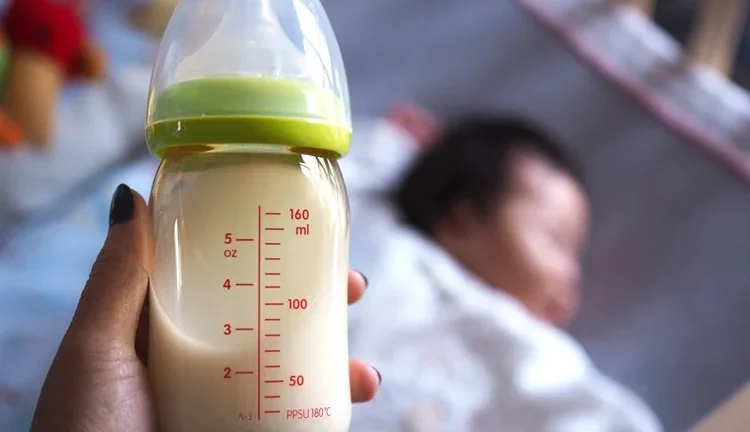
Human milk contains essential nutrients to support infants’ growth and protect them from various diseases, including respiratory infections. Human milk contains bioactive components such as cytokines and adipokines. It also contains hormones, lipids, and immunoglobulins. Growth factors, cells, and extracellular vesicles are all present.
HMEVs, or lipid-bilayer-enclosed nanoscale vesicles, carry molecular cargo selected from mammary glands. These vesicles modulate gene transcription and cell signaling within infant tissues. The infant’s intestinal mucosa is their primary target.
Research has shown that pathological conditions of the mother during pregnancy can affect HMEV cargos and may lead to functional changes in breastfed infants. It is still unclear what the exact mechanisms are.
Globally, the coronavirus pandemic of 2019 (COVID-19), also known as COVID-19, has been a significant challenge for public health. SARS-CoV-2 exposure can affect human milk, but there is limited information on the effects of maternal SARS-CoV-2 infections during pregnancy on HMEVs.
The study
Nine SARS-CoV-2 prenatal and nine control samples were taken from the IMPRINT cohort. After casein micelle defatting and disaggregation, 1 ml of milk was subjected to a sequential centrifugation process, followed by ultrafiltration and qEV size exclusion chromatography.
MISEV2018 guidelines were used to characterize the proteins and particles. EV lysates were analyzed using miRNA and proteomics.
Surfaceomic analysis was performed on the intact EVs. Multi-Omics were used to predict HMEV function correlated with SARS-CoV-2 prenatal infection.
Key Findings
Using SC-UF-qEV, sufficient EVs could be isolated from human breast milk. At first, milk samples were centrifuged at low speeds to remove milk fat.
Sodium citrate (calcium chelator) was added in the initial phase of the SC UF qEV method to disrupt the casein micelles. To validate the presence of HMEVs, we followed the International Society for Extracellular Vesicles guidelines.
Nanoparticle Tracking Analysis was used to determine the concentration and size distributions of the isolated HMEV particle. Most particles in the HMEV isolated were smaller than 200 nanometers, consistent with a small EV population. The transmission electron microscopy revealed the cup-shaped nanoscale morphology in the HMEV particle.
Western immunoblot detected three common EV markers, including CD9, ALIX, and HSP70. These markers were enriched in HMEV, not human milk, microvesicles, or defatted HM. CD9 is a surface tetraspanin. ALIX, a membrane-associated protein, is associated with EV biogenesis. HSP70, a cytosolic EV protein, is present in EVs.
Principal Component Analysis, an application of machine learning, was used to distinguish HMEVs, HMs, dHMs, and MVs. Targeted analyses revealed that HMEVs had high levels of CD9 and ALIX and HSP70 and XDH, cadherin, and butyrophilin.
The two study groups did not differ statistically in maternal demographics and HMEV parameters such as particle count, RNA, and protein. The COVID-19 prenatal group was positive for SARS-CoV-2 three months before delivery.
Participants from both groups did not receive a COVID-19 vaccine before collecting milk. HMEV analysis provided insight into how COVID-19 affects the mammary ducts and lactation physiology.
Surfaceomics, proteomics, and miR-seq were used to analyze the HMEVs from the COVID-19 isolates. One thousand one hundred eighty-nine miRs and 232 proteins were quantified, identified, and detected in HMEVs. It was interesting to note that 91 proteins were significantly altered, with 35 being downregulated.
According to multi-omics analyses, mothers with prenatal COVID-19 synthesized HMEVs associated with metabolic reprogramming and mucosal tissue growth. They also reduced inflammation and EV transmigration.
These findings suggest that breastfed infants may be protected from respiratory and intestinal diseases. In vitro, studies revealed a wide range of antiviral activities for HMEVs.
Conclusions
This is the first study that reveals the protection of infants from viral infections by prenatal SARS-CoV-2 through enhanced mucosal-specific functions of HMEVs.
These findings need to be validated by using larger samples. It is also essential to follow up at multiple lactation stages to determine whether the changes in HMEV following prenatal COVID-19 were permanent or only temporary.