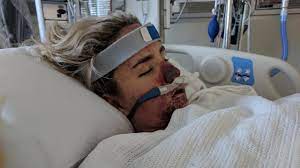
Lisa Evans spent about $20,000 on breast cancer, but her costs of health monitoring will continue throughout her life.
The teacher said she needs a yearly mammogram to monitor her health, which costs about $320 per appointment.
She must also pay for gap fees, including regular medication and oncologist visits. This totals $1,000 per year for the remainder of her life.
The 57-year-old’s ongoing expenses are in stark contrast with her brother, who was diagnosed with lung cancer just a year after the woman became ill.
She said, “He’s paid nothing near what I paid.”
“I don’t know why I pay.” “The costs have been crippling.”
She is among many who question whether the costs of the health system disadvantage women disproportionately.
Doctors, health professionals, and patients from all over the country have contacted ABC following an article on the rising out-of-pocket costs for radiology. Some expressed concern about a bias against women in the Medicare Benefits Schedule.
Grattan Institute 2022 report shows that women spend significantly more out of pocket on healthcare than men. Younger women also pay more than men of the same age. The reasons for this are maternity care, chronic illnesses, and higher rates of chronic disease.
Gino Pecoraro, president of the National Association of Specialist Obstetricians and Gynecologists, told ABC that pregnancy ultrasounds are a clear example of gender bias.
A basic ultrasound of a man’s testicles costs more than an initial pregnancy ultrasound determining whether a woman has conceived.
Dr. Pecoraro stated that female anatomy is more complex than male anatomy. This price difference was due to this.
Overall, he stated that his female patients are at a disadvantage.
“It is indicative of an overall underinvestment in the health of women,” said Dr Pecoraro.
It starts with pregnancy and continues with heart attacks because women have different symptoms.
Pregnancy scans require expertise.
Dr. Pecoraro is an obstetrician and locum in Brisbane and works in regional NSW at Dubbo and Tamworth. He said that the problem with ultrasounds continues throughout pregnancy.
He said that the costs of scans performed later in pregnancy could vary because some women choose to go to specialist centers for pregnancy scanning, and others opt for general radiology centers where they may be bulk-billed or pay a lower out-of-pocket fee.
He said that because of the different levels of training between a general clinic, and specialized women’s health centers, he would sometimes need to send patients back for a second scan. This meant Medicare was charged twice.
He said that the danger of a general clinic is that the radiologists still need to complete the extra three years of training required to become specialists in women’s imaging and are more likely to miss issues.
He said the Medicare rebate would be the same for all women, regardless of whether they had a specialist scan.
The scan will cost more if you require more training. This can be prohibitive,” said Dr Pecoraro.
The sexist bias in Medicare is not clear.
Emily Callander is a health economist at the University of Technology Sydney specializing in maternal health. She said that gender bias was a hidden problem in the Medicare system.
She said that while it is unlikely to have been done deliberately, there could be an unintentional systemic bias.
She said, “There is a very poor line of vision into this problem and that’s one part of the issue.”
The Medicare data shows that the out-of-pocket costs are very high for obstetrics, and they are rising much faster than in other areas of healthcare.
The entire pregnancy journey can cost women thousands of dollars.
Medicare data shows that bulk billing for obstetrics items has fallen from 61% to 58% between 2018 and 2023. The average out-of-pocket cost for nonhospital items also increased from $250 to $303.
Dr. Callander stated that women without children may also face higher costs for their health than men.
She said living longer and having a higher risk of chronic illnesses contributed to the financial burden.
She said, “Their health is worse than that of men and is getting worse over time.”
Lisa Evans was concerned that while her initial mammogram that detected her cancer was covered by insurance, the scans she had after her diagnosis were not.
She said, “It’s really hard to make ends meet when you have to pay to get something that other people are getting for free.”
Lisa Evans, a woman in a similar position to herself, said that while she managed her own costs, she is concerned about those less fortunate women.
She said, “I’m worried that people won’t be able to afford their regular scans.”
A spokesperson from the federal health department said that the National Women’s Health Strategy acknowledged gender could influence health outcomes. It also established a National Women’s Health Advisory Council, which would advise the government about improving women’s and girls’ health.
The Council agreed to examine gender biases in the health care system from four perspectives: safety, research, access, care and outcomes, and empowerment.
The Council may consider specific case studies such as Medicare Benefits Schedules (MBS) or maternity care under the various focus areas.
It also launched a #EndGenderBias Survey to understand better the unique gender bias and barriers women face in Australia’s health care system. They had plans to introduce MBS items to treat certain conditions affecting women, such as tests to determine whether a patient is at risk of recurrent cancer.