Machine-learning techniques, which have been popularized in the medical field due to the rapid growth of computing power in the last few decades, are used in order to predict the survival rate and life expectancy for patients with various diseases, including cancer, stroke, heart disease and more recently COVID-19. This statistical modeling allows patients and caregivers to balance treatments that offer the best chance of cure with those that minimize side effects.
The University of Texas at Arlington professors and their doctoral students have published a model for predicting cancer survival, which they claim is 30% more accurate than previous models at predicting those who will be cured of the disease. This model allows patients to avoid unnecessary treatments while allowing the treatment team to focus on those who require additional interventions.
Previous studies that modeled the probability of cure (also called cure rate) used a generalized linear model with a parametric link function, such as the logistic function. This type of research does not capture complex or nonlinear relationships between cure probability and covariates such as the age of the patient or the age of bone marrow donors,” said Suvra Pal. Our research combines the previously tested PCM (promotion time cure model) with a supervised type ML algorithm known as a Support Vector Machine (SVM), which is used to capture nonlinear relationships between covariates and cure probability.
The new SVM-integrated PCM (PCM SVM) model is supported by a grant provided by the National Institute of General Medical Sciences. It uses a simple interpretation of the covariables in order to predict the patients who will not be cured after their initial treatment and require additional medical intervention.
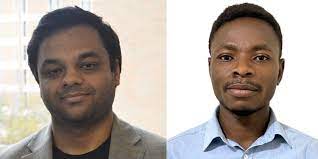
Pal and Wisdom Aselisewine, his student, tested the technique by analyzing real data from patients who had leukemia. Leukemia is a blood cancer often treated through a bone marrow transplant. Researchers chose leukemia as it is caused primarily by abnormal white blood cells. This does not occur in healthy people. Therefore, the researchers were able to see
clearly which patients from the historical data set had been cured.
The newer PCM SVM technique proved to be 30% better at predicting which patients would benefit from the treatment compared to the older technique.
Pal stated, “These results clearly demonstrate the superiority” of the model. Our improved accuracy in predicting cures can protect patients with high cure rates from additional risks associated with high-intensity treatment. Patients with low cure rates may also be advised to seek treatment early so that their disease doesn’t progress into a stage where there are few therapeutic options. The model proposed will be important in defining an optimal treatment strategy.