Blood poisoning requires that the bacteria present in the blood be identified quickly so that life-saving treatment can be initiated. Researchers at Empa have developed “sepsis sensor” magnetic nanoparticles to detect bacteria pathogens quickly and identify candidates for antibiotic therapy.
Qun Ren counts every second. The Empa researcher is working with her team to develop a rapid diagnostic method to detect blood poisoning from staphylococcus bacteria. The reason is that staphylococcal infection is fatal in 40 percent of cases. The disease may have begun as a skin condition or pneumonia. Severe complications can occur once the staphylococci infect the bloodstream during sepsis. In these situations, the pathogens must be identified quickly, and antibiotics are chosen for treatment. This is especially important for those affected, as Staphylococcus australis strains may resist certain antibiotics. Qun Ren, group leader at Empa’s Biointerfaces laboratory in St. Gallen, explains that if the bacteria from a blood sample must first be cultivated to perform a diagnostic test, time is well-spent. Qun Ren, her teammate Fei Pan and researchers from ETH Zurich looked for a solution to the long intermediate step.
Fish out of the Blood
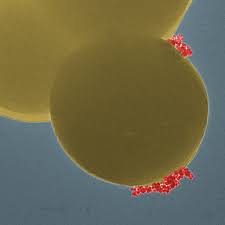
The team developed a method that uses magnetic nanoparticles to bind staphylococci. A magnetic field can be used to detect the bacteria. The sensitivity of the bacteria to antibiotics will be determined in a subsequent step using a chemiluminescence technique. The sample will emit light if resistant bacteria are in the test tube. The reaction vessel will remain dark if, on the contrary, the bacteria can be destroyed with antibiotics.
Dangerous glow
Pseudomonas aeruginosa is another unpleasant member of the bacterial world. This rod-shaped bacteria can cause various diseases, such as infections in the urinary system, which are transmitted via a catheter. These infections can develop into sepsis. These pathogens can also be resistant to many antibiotics.
Another advantage of magnetic nanoparticles is that they can be tailored for many different types of bacteria. This works like a modular system. In this way, researchers at Empa were able to create a “sepsis detector” based on magnetic particles. The method accurately identified the bacteria species in artificial urine samples and detected possible antibiotic resistance via a chemical luminescence reaction.
The researchers have tested their magnetic nanoparticle kits for sepsis, urinary tract infection, and sepsis using laboratory samples. Qun Ren says the next step is to evaluate patient samples with our clinical partners to validate sepsis test results.
Box: global antibiotic crisis
Antibiotics are responsible for more than a million yearly deaths due to their decreasing effectiveness. Some staphylococci, for example, are no longer controlled by common antibiotics due to their resistance. It is especially alarming to see the proportion of multi-resistant pathogens. The worldwide antibiotic resistance is already described as “a silent pandemic.” In Europe, staphylococci can resist different antibiotics depending on where you are. For example, Portugal, Italy, and Scandinavia have higher rates of resistant staphylococci. According to statistics for 2021 from the Federal Food Safety and Veterinary Office, this number is 4.7% in Switzerland. Pseudomonas aeruginosa can also be antibiotic-resistant, leading to sepsis, severe pneumonia, and urinary tract infection. The speed and accuracy with which a disease is diagnosed can be crucial for those infected.