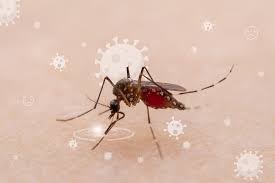
Once in the bloodstream of humans, the malaria parasite is transmitted by infected mosquitoes. It ruptures red cells and quickly infects the new ones, starting the cycle again. An internal clock controls this cycle and occurs in multiple 24 hours, depending on the species. Infected humans with malaria parasites experience rhythmic fevers and chill every 24 hours, 48 hours, or 72 depending on the Plasmodium species.
Can the parasite’s biological clock “sync” with the human host’s circadian time?
Researchers from the Armed Forces Research Institute of Medical Sciences, Duke University, and Florida Atlantic University have discovered evidence of “coupling” between the parasites and their hosts. This could lead to the development of new treatments for the disease, which kills a child younger than five years old every minute.
Researchers wondered if it would be beneficial for parasites to time their development and cell division at times when the immune system of the host is most suppressed. They used phase alignment to test the theory of coupling. This is the time and pace of both clocks.
The results, published in the Proceedings of the National Academy of Sciences, provide direct evidence that a parasite’s inherent developmental cycle is aligned with the host’s clock during malaria infection. This alignment indicates an evolutionary adaptation that helps to create synchrony during the blood phase between the parasites and the host’s circadian rhythm.
The discovery of molecular signals to coordinate the synchronization of malaria parasites and hosts will have significant implications in the future for new antimalarial treatments against a disease that continues to become increasingly resistant to current drugs, said Francis Motta, Ph.D. first author and assistant professor at FAU’s Charles E. Schmidt College of Science.
An ex vivo culture of whole blood was performed for the study. Researchers simultaneously measured the gene expression in the malaria parasite and humans to see which genes turned on and off rhythmically at 48-hour and 24-hour intervals. They could compare the shifts of humans and parasites based on their internal clocks by comparing genetic oscillations that lasted 48 hours. Researchers would check if the correct amount shifted forward the parasite cycle if a shift in the human process occurred. The researchers did this for all pairs of participants to determine the correlation between changes in the human circadian cycle and parasite shifts.
The gene transcripts showed that the phases of the host’s circadian cycle and that of the parasite’s cycle were correlated in multiple patients. This supports the idea that the two processes are phase-coupled. This suggests that oscillators controlling intraerythrocytic parasite cycles in Plasmodium-infecting Plasmodium are coupled with the host circadian rhythm.
Motta said, “Knowing two intrinsic clocks align gives us a mechanistic explanation of the fundamental underpinnings of this disease. We can then use genetic targets as a treatment.” In mice, it has been demonstrated that disrupting or misaligning a virus’s development cycle with its host’s circadian rhythm decreases fitness or health. It may be possible to treat malaria if we disrupt the parasite’s development cycle, making it less synchronized with human hosts. If we can make it happen, this is the hope and ultimate reward.”
This research relied heavily on a rigorous mathematical and statistical approach to compare and determine phase shifts from highly dimensional, noisy data. The extraction of circadian signals from blood whole was also complicated because genes needed to be strongly expressed.
The math allowed us to reduce our assumptions about the data. Motta said that the conclusions of this research may only have been possible if we had not dealt with data, context, and whole blood collected from malaria patients, which needed to be better understood. We let the data speak for themselves without making assumptions about the knowledge we do not yet possess. The math enabled us to achieve this.
Researchers speculate that the pathogen and host can read chemical or physiological signals to align their phases.
The senior author, a Duke professor of biology, Steve Haase, said, “There must be molecular messages that they are passing back and forward to each other.” We have yet to determine what these molecules are. But if we disrupt them, we may have a chance to intervene.
The study co-authors include the University of North Carolina, University of California, San Francisco, Geisel School of Medicine, Dartmouth, Cymantix, Inc., Memetics, LLC, Sana Biotechnology, Inc., Mahidol University, Thailand, United States Armed Forces Research Institute of Medical Sciences, Thailand, Walter Reed National Military Medical Center, Walter Reed Army Institute of Research, and Geometric Data Analytics.