You can also read about it here.
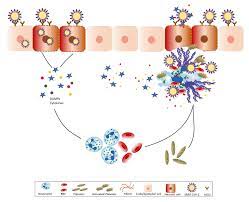
Coronavirus disease 2019 is an acute respiratory illness caused by the severe acute respiratory syndrome coronavirus 2(SARS-CoV-2). This can cause acute respiratory distress syndrome, multi-organ failure, and death. It poses a significant threat to health. The function and dysfunctional neutrophils are linked to pathological mechanisms such as cytokine storms caused by uncontrolled activation of the innate immune system, the release of damaging-associated molecular patterns during tissue injury, and a high rate of thrombotic events. In particular, the increased formation of neutrophil extracellular traps (NETs) and low-density (LDNs) has been linked to the severity and poor outcome for patients with COVID-19. Our work focuses on understanding the increased number, abnormal activation, lung tissue infiltration, and elevated neutrophil-to-lymphocyte ratio in the pathogenesis of COVID-19. We explore the role of NETs, LDNs, and thrombosis in disease progression. Potential therapeutic strategies that target neutrophils and NETs are also analyzed.
The following is a brief introduction to the topic:
Coronavirus disease 2019, or COVID-19, is a highly infectious respiratory disease caused by severe acute respiratory syndrome two coronavirus (SARS-CoV-2). In December 2019, it was confirmed as the third deadly coronavirus after SARS-CoV, the Middle East respiratory syndrome (MERS)-CoV [1], and the World Health Organization declared a Global Public Health Emergency.
Neutrophils, COVID-19
Recent studies have shown a significant increase in the neutrophil count of patients with COVID-19. [5, 14, 15]. Chen et al. [16] reported severe or critical COVID-19 patients had significantly higher neutrophil counts upon admission than mild/moderate patients. A higher neutrophil count is associated with a worse prognosis and increased disease severity. Similarly, Li et al. According to previous studies [17], a neutrophil count that is significantly higher can be used as a measure of disease severity.
An increased neutrophil count and a decreased lymphocyte count in COVID-19 patients lead to an elevated neutrophil-to-lymphocyte ratio (NLR) [18,19,20]. Sun et al. [21] compared COVID-19-admitted patients to the intensive-care unit (ICU) with non-ICU admitted COVID-19 and found the COVID-19-admitted patients had the lowest neutrophil count and lymphocyte counts. The study also showed that NLR is an independent predictor for disease severity among COVID-19. Recent studies have shown that NLR is an independent predictor of disease severity for COVID-19 sufferers [22,23.24.25]. Chen et al. [16] showed that NLR was significantly higher among non-survivors than survivors from admission until the end of the hospitalization. This further supports the use of NLR for COVID-19 in the early stages.
Studies have also shown that the neutrophil count is elevated in peripheral blood and injured tissues. In April 2020, Barnes et al. [26] reported neutrophilic infiltration of pulmonary capillaries and neutrophilic mucositis. They also found extravasation in the alveolar cavity, acute capillaritis, and fibrin deposits in lung autopsy specimens from three COVID-19 patients [27]. Zhou et al. [28] performed metatranscriptome sequence analysis and functional analyses of bronchoalveolar fluid (BALF), samples taken from COVID-19 (n=8), community-acquired pneumonitis (n=146), and healthy controls (20). They reported a higher number of neutrophils and an upregulation of different neutrophil chemoattractants among COVID-19 (n=8) patients. Wauters et al. [29] found that BALF samples of patients with COVID-19 were higher in neutrophil count when compared to samples from COVID-19-free patients. Researchers have also discovered that increased neutrophil counts correlate with tissue damage markers such as hypersensitive Troponin (hsTnT), alanine, and aspartate aminotransferases (AST) in patients with myocardial damage or liver damage complications.
COVID-19 and NETs
Neutrophils release web-like structures known as NETs. These structures capture and immobilize pathogenic microorganisms and produce high concentrations of MPO and defensins to resist exogenous infection [30]. NETs comprise citrullinated histones, neutrophil granular protein, and cell-free DNA [31]. Traps were first discovered to form due to neutrophils responding to bacteria. Interestingly, NETs have antiviral effects as well [32]. In various diseases such as respiratory syncytial viruses (RSV) (33), dengue virus, flu virus, or even HIV (34,35), their role in fighting viral infections has also been observed. Several studies have also reported that NETs are involved in the immune response to viral pathogens.
In COVID-19 patients, studies have shown elevated levels of neutrophil Extracellular Traps (NETs) in peripheral blood and lung tissues [14,37,38]. In 2020, Barnes et al. In 2020, Barnes et al. Zuo et al. analyzed serum from 50 infected patients and found an increase in NETs, indicating overactivation. Proteomics analysis revealed a correlation between granules, NETs, and respiratory distress severity in patients with pneumonia. Interestingly, elevated NETs component levels, such as citrullinated DNA, cell-free RNA, and MPO-DNA complexes, were also observed in COVID-19 patients [39]. Gueant et al. [40] carried out a multicenter trial involving 155 COVID-19 cases and concluded that DNase, NE, and NETs were involved in the early and later progression of COVID-19. The significant elevation of NE in severe COVID-19 could be associated with neutrophil activation via the IL-8/CXCR2 pathways. NE and histone DNA were related to multi-organ systemic damage in COVID-19, including lung injury. Cardiovascular injury and renal insufficiency. NE levels greater than 593 ng/ml have been identified as a predictor for multiple-organ injury. In addition to being associated with increased severity of COVID-19 and lung injury, elevated NETs are also responsible for microvascular thrombosis and lung injury [37].
. SARS-CoV-2 infected patients can present various clinical symptoms and prognoses, from asymptomatic to severe acute respiratory distress (ARDS) and multiple organ dysfunction syndromes. Understanding the pathophysiology of COVID-19 has been an urgent need ever since the outbreak began. The dysregulation of cytokines due to uncontrolled activation by the innate immunity system, the release of damage-associated molecular patterns during tissue injury, and the increased incidence of thrombotic events are all linked with neutrophils. The increased formation of low-density neutrophils (LDNs), and the production of neutrophil extracellular trapped (NETs), play essential roles in immunopathology and are closely related to the severity of the disease.
Neutrophils are the most common type of leukocytes found in circulation and makeup between 50-70%. Neutrophils were considered the primary immune defense against bacterial, fungal, and viral pathogens. Recent research has shown that neutrophils play a more diverse and complex role than was previously believed. They also play a crucial role in the defense of viral infections, such as respiratory syncytial viruses (RSV), influenza A viruses (IAV), highly-pathogenic avian flu virus, and the vesicular stomatitis virus. Pathogen-associated molecule patterns (PAMPs), including lipopolysaccharide, lipoteichoic acids, proteins, ribonucleic and deoxyribonucleic acids (DNA), and RNA, are released during infection and recognized by your immune system. They then bind with various pathogen recognition receptors.
Activated neutrophils release a variety of proinflammatory mediators such as interleukin-6(IL-6), Interleukin-8(IL-8), IFN-g (IFN g), and tumor necrosis-factor-a (TNF a). These mediators are crucial in recruiting another immune cell to the infection site. Activation of neutrophils in excess can cause oxidative stress and local and systemic inflammation, and damage to capillary endothelium, contributing to increased thrombotic incidents.