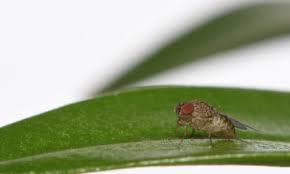
Researchers have discovered a way for female fruit flies to produce offspring when no males are present.
Scientists have identified genes that allow one species of fruit fly to reproduce without sperm fertilization. The scientists then genetically modified another species, which usually reproduces by sexual reproduction, to produce young without sperm.
The first time that a virgin fly produced an embryo capable of developing to adulthood and repeated the process, Dr Alexis Sperling said. She is a researcher from the University of Cambridge.
The study, published in the Current Biochemistry journal, lasted six years and involved 220,000 flies.
Researchers first examined a species called Drosophila Mercatorum and its ability to reproduce through virgin births or parthenogenesis.
By sequencing the genome of the fruit fly Drosophila melanogaster and identifying the gene responsible for the virgin birth, researchers were able to find the corresponding gene within another species of Drosophila.
The team discovered that the genetically modified female flies waited around 40 days to see if they could find a male with whom to reproduce before initiating a virgin birth.
These flies could reproduce by mating either with males or by virgin birth.
Sperling stated that switching to virginity could greatly benefit the species. It would also serve as a backup reproductive system for isolated females.
She also noted that this could be a negative side since virgin births may reduce the species’ ability to adapt to environmental pressures.
Sperling also added that there might be another issue.
“If the selection pressure on virgin births continues to exist in insect pests – which it does – they will reproduce only this way at some point,” said she.
It could be a problem for agriculture because only females are produced. Their ability to spread will double.
Sperling said that although the new research found a method to “switch-on” virgin births among fruit flies, it was unlikely the approach would be successful in mammals, even though parthenogenesis has been observed in animals like lizards, honeybees, and honeybees.
The paternal gene is not necessary in species capable of virgin birth.
Sperling explained that “mammals are separate from fruit flies and this is not a naturally occurring phenomenon.” He added that the success of his work with the fruit flies stemmed in part from the fact that they have been used in research for a long time, which means their genetics has been well understood.
The research has helped to “understand the beauty and uniqueness of life” and “this type of reproduction.”
Dr. Hannah Maude, a scientist at Imperial College London who was not part of the research, has also stated that it is unlikely that these findings will apply to humans.
She said: “Our diversity protects you. Having two copies of DNA is not only a backup against harmful DNA variants, which are found in everyone but also necessary for imprinted regions. These are active because they come from either the paternal or maternal DNA copy.”
This exciting research advances our understanding of animal reproduction.