Researchers at Griffith University have been instrumental in controlling the assembly of viruses by using DNA templates.
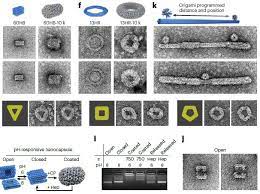
The global team behind the research, titled “DNA-origami-directed virus capsid polymorphism,” published in Nature Nanotechnology, developed a way to direct the assembly of virus capsids–the protein shell of viruses–at physiological conditions in a precise and programmable manner.
Dr. Frank Sainsbury, Dr. Donna McNeale, and the Griffith Institute for Drug Discovery led the project. They said that forcing viruses to fold DNA into different shapes – like origami – was the question this project answered.
Dr. Sainsbury stated that “we achieved control over the shape, size, and topology of the virus proteins by using user defined DNA origami Nanostructures as binding platforms and assembly platforms which became embedded within capsid.”
The coatings of virus proteins could protect the DNA origami encapsulated from degradation.
This activity is like wrapping a gift. The virus proteins are deposited on top of the shape defined by DNA origami.
The coated DNA origami can be used in a variety of ways.
The development of new delivery systems and vaccines would be enhanced by precise control of the size and form of the virus proteins.
McNeale stated that “current tools to control assembly in a programmable way were elusive.”
Our approach is not limited to a specific virus capsid protein unit type. Still, it can be applied to RNA/DNA origami to pave the way for next-generation strategies to protect and target cargo.
Dr. Sainsbury’s team is working to understand better how viruses assemble themselves and how they could be used to encapsulate various cargoes.
They can then design and modify other virus-like particles to suit various applications. They discovered, for example, that a virus from mice can transport protein cargoes into subcellular compartments in human cells despite inhospitable conditions.
There is much to be learned from viruses, given their vast design space. We will continue to push the limits of how virus-like particles can assemble and what we can learn from using them as medicine carriers, vaccines, and reaction vessels”, Dr. Sainsbury stated.
This approach will be used in the next phase of GRIDD’s research to examine why viruses do not assemble themselves into different shapes.