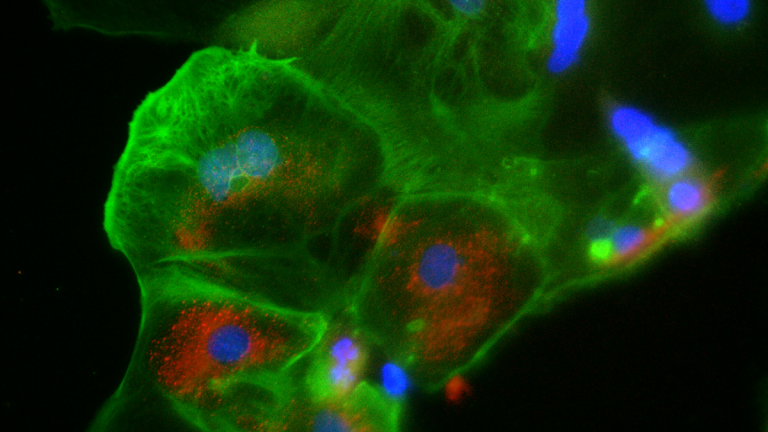
In a landmark paper published on 14 July by Nature Cell Biology, Australian researchers led by Prof. Jose Polo of Monash University and the University of Adelaide, and Professor KantaSubbarao of the University of Melbourne, have shown how COVID-19 infects the human placenta.
Researchers have shown that COVID-19 infection during pregnancy can lead to adverse outcomes. However, little is known about SARS-CoV-2 infections in pregnancy and the mechanisms involved.
The Australian team grew the placenta in the laboratory using Professor Polo’s method. This involves reprogramming human skin cells into trophoblast stem cells, which are the cells that attach a developing embryo to the uterine wall and form part of the placenta. The researchers found that ACE2, a specific protein that allows SARS-CoV-2 into organs like the lung, was present in specific placental cells.
ST cells are susceptible to the virus. This is a significant finding, as ST cells produce the hormone that maintains pregnancy (hCG).
Dr. Joseph Chen is a stem-cell biologist and coauthor of the study at Monash University. He said that this discovery explains many of the clinical reports previously published.
He said: “We observed that SARS CoV-2 infection resulted in a significant decrease in the survival of ST cells and their differentiation, which led to lower production of HCG.”
It is possible that COVID-19 can affect pregnancy in this way, but further research is needed.
Jessica Neil, a virologist at Doherty Institute in New York and co-first-author of the study, said: “Our team discovered that antiviral drugs and anti-ACE2 antibody were effective for preventing SARS and CoV-2 infection as well as restoring normal ST function.”
Professor Subbarao stated that this study represents a significant advancement in understanding viral infections during pregnancy.
Our study offers valuable insights into the relationship between SARS-CoV-2 and placenta disease. “This is a major breakthrough as we can now explore how other viruses may also affect the early placenta,” said Dr. Shea.
Professor Polo stressed the importance of research to establish a platform for studying early placental cell types.
This study helps us understand what happens when COVID-19 infects placental cells during pregnancy. It also means we have created a platform for studying early placental cells.
Additional Information:
- The study was published in Nature Cell Biology (DOI: 10.1038/s41556-023-01182-0).
- The Medical Research Future Fund, Australian Research Council, National Health and Medical Research Council, and the Victorian Government and Australian Government funded this research.
About the Monash Biomedicine Discovery Institute
Committed to making discoveries that will relieve the future disease burden, the Monash Biomedicine Discovery Institute (BDI) at Monash University brings together more than 120 internationally-renowned research teams. Monash BDI, one of Australia’s largest biomedical institutes, has seven discovery programs spanning Cancer, Cardiovascular Diseases, Development, Stem Cells, Infection, and Immunity: diabetes and Obesity Neuroscience. Our researchers benefit from world-class infrastructure and technology and work with clinicians, researchers, and industry to improve lives.
Peter Doherty Institute for Infection and Immunity
Innovative approaches and concentrated efforts are needed to find solutions for preventing, treating, and curing infectious diseases, as well as understanding the immune system’s complexity. The University of Melbourne, a leader in teaching, research, and education, and The Royal Melbourne Hospital, a medical institution internationally recognized for its outstanding care, research, and treatment, have partnered to create The Peter Doherty Institute for Infection and Immunity.
The University of Adelaide
The University of Adelaide is a place that brings together and supports those striving to improve the world and themselves. This is a place that makes history.
Since 1885, when Adelaide Medical School was founded, the University of Adelaide has worked to improve health and care in the world. Graduates are prepared to provide the best possible care and be tomorrow’s health leaders.
The University is also a leader in health research that benefits society. Respected health researchers, who prioritize industry partnerships, lead transformational investigations that produce a wealth of new insights, innovative treatments and technologies, and improved policies.