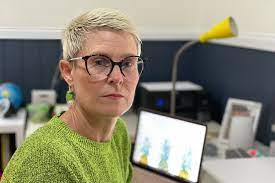
Penny Allman Payne, a federal senator, spent much childhood swimming in the sun. Her skin cancer diagnosis wasn’t surprising but was a warning.
During the last federal election campaign, Ms. Allman Payne underwent nose surgery to remove a basal-cell carcinoma.
Skin cancer is not aggressive, and the prognosis is good when caught early. However, her doctor said that this was an indication of further sun damage on her face.
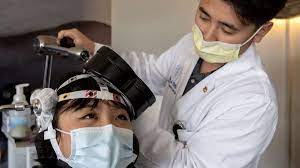
During the parliament’s winter break, she received preventative topical chemotherapy to remove any lurking cancerous cells.
Ms. Allman Payne stated, “I was a competitive swimmer when I grew up.”
“My family is prone to skin cancer.” My mum had melanoma. The senator was only in her early fifties and had always checked her skin regularly. This is why the cancer was detected early.
Two in three Australians are diagnosed with skin cancer during their lifetime.
Slip Slop Slap: Success is possible.
Cancer Council Queensland Research Director Joanne Aitkin stated that Australia had the highest rate in the world of skin carcinoma. Still, the rate of melanomas – the most severe form of skin tumor – decreased for those born after 1980.
She noted that this was especially true in Queensland, where the rate of melanoma is highest.
As people age, skin cancers will increase dramatically in Australia in the next 20-30 years.
“Across all Queenslanders, the rate at which melanoma is diagnosed has gradually increased by about 0.7% per year over the last 20 years. From approximately 66 people out of 100,000 in 2001, to 76 people out of 100,000 in 2020,” said Ms Aitkin.
Skin Cancer College Australasia CEO Lynette Hunter said all skin cancers, even the less aggressive basal cell carcinomas, should be taken very seriously.
She said, “Other forms of skin cancer are extremely disfiguring and can cause death if they are not treated.”
Cumulative exposure is the real danger.
Ms. Allman Payne believes her time outdoors was a significant factor in her cancer diagnosis and motivated her to continue treatment.
Australia’s high skin cancer rate isn’t just because people spend much time outside.
“People who work primarily indoors tend to become complacent and only take precautions if they are going out consciously,” said Ms Hunt.
The real danger is cumulative exposure.
It’s when you remove the garbage, walk your dog, or water the garden.
She also said that it is essential to remember that topical chemo does not work on melanoma but can be effective as a prevention measure and for basal-cell carcinoma.
Ms. Allman Payne, despite having had a severe reaction to treatment, said that she did not regret it.
She said, “There is no time when you feel more vulnerable as when your health goes a little pear-shaped.”
She said, “You won’t see my outside without 50+.”