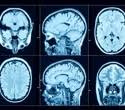
Adam Kloppenberg (Down syndrome) is a patient of Beau Ances, MD and Ph.D., a neuropsychologist at Washington University School of Medicine, St. Louis. Alzheimer’s is a severe disease for people with Down syndrome. Ances is part of a project headed by Jason Hassenstab, Ph.D., associate professor in neurology. The goal is to develop tools for measuring cognitive function in individuals with Down syndrome and Alzheimer’s.
Nearly all people with Down syndrome will eventually develop Alzheimer’s. Yet, people with Down syndrome are routinely excluded from Alzheimer’s clinical trials because the cognitive assessment tools are often inappropriate for people with developmental disabilities. No one knows if the new Alzheimer’s therapies hitting the market work for those with Down syndrome. This population is at risk of losing out on life-changing treatments.
Jason Hassenstab, Ph.D., associate professor of neurological and psychological & brain science at Washington University, St. Louis, is trying to remedy this situation with an $11 million grant from the National Institute on Aging (NIH), a part of the National Institutes of Health.
The grant will fund the Down Syndrome-Ambulatory Research in Cognition Study, an international collaboration to develop and validate novel assessment technologies for clinical trials of Down syndrome-associated Alzheimer’s disease patients.
In the first phase, researchers will develop a smartphone application to measure cognitive functions in people with Down syndrome.
Randomly, the app will notify participants, “It is time to play a Memory Game!” The participants can tap the notification to be taken to a smartphone-based cognitive game that takes three to five minutes to complete. The information will be sent multiple times per day for one week.
Beau Ances, MD Ph.D., Daniel J. Brennan, MD Professor of Neurology, Biomedical Engineering and Radiology, said it was challenging to evaluate everyone for Alzheimer’s. Some people dislike taking tests, and some cannot accept any difficulties. We have to find a different way to assess. We could make instantaneous assessments if we took the test using our smartphone without the confusion of a laboratory.
The frequent use of a smartphone application to test cognition will ensure that the participant’s understanding is tested under various natural environments and emotional conditions. The app will also assess the participants’ background, stress, and distractibility immediately following testing sessions. This ensures that all factors are taken into account. These results will be averaged to understand natural cognitive variability better.
Hassenstab stated, “We expect to see fluctuations.” This is normal. It’s the way cognition works. When we measure awareness with pencil-and-paper tests, participants are seated across from someone in a lab coat. This little bit of cognitive functioning represents how cognition functions throughout your life. But that’s not true.”
Researchers will track participants for three years in preparation for clinical trials on people with Down syndrome and Alzheimer’s. The first-year tools will be evaluated to determine their usefulness in measuring changes in cognition over time. The devices could be used to test the effectiveness of medication in preventing or slowing Alzheimer’s disease in people with Down syndrome.
Down syndrome is characterized biologically by an extra copy on chromosome 21. This gene produces an amyloid protein, one of the two proteins driving Alzheimer’s disease. This additional copy results in excessive amyloid, which is why so many people with Down syndrome develop Alzheimer’s.
Ances stated that “a lot of people still do not know that having Down syndrome increases your risk of Alzheimer’s later in life.” “Developing functional assessment measures for this group could help us begin clinical trials with these populations.” “Better therapies for this population can also translate to the wider community.”
Hassenstab says that the study is innovative because of its international component. This ensures that participants from various backgrounds will be included and that all outcome measures can be used globally. This also poses unique challenges when creating accurate assessment tools.
Hassenstab explained that very few things are the same everywhere or, if they are, they have a different meaning. In the U.S., for example, bread is a loaf of leavened bread baked in an oven. Some places use bread to describe something round and flat cooked in a pan. It isn’t easy to develop assessment tools that work across cultures and languages, but this is essential if we want to be able to help people from all backgrounds.
Six international sites are included in the study: Washington University School of Medicine in Washington, King’s College London in London, Hospital Sant Pau Barcelona in Barcelona, University of Gothenburg, Sweden, Ludwig Maximilian University of Munich in Munich, and Instituto Fleni Buenos Aires.