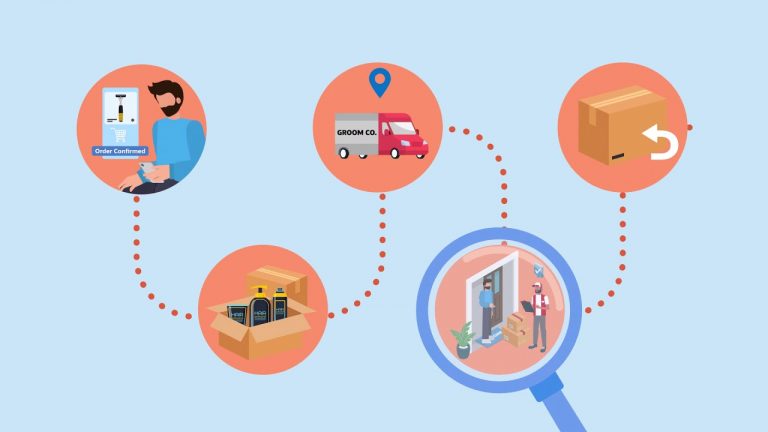
Order fulfilment, which is by definition the process by which a company processes a customer’s sales order, is important. Customers have greater power and are more informed than ever. They also have higher expectations. A company’s reputation, its profits, and the ability to retain customers are all dependent on efficient order fulfillment.
There is no business without sales. Without order fulfillment, there is no business.
What is Order Fulfilment?
Order fulfillment is the process of receiving and processing goods in order to distribute them to customers.
What does order fulfillment mean?
Fulfillment of an order is fulfilling a customer’s sales order according to their specifications. This means delivering the goods promised at the point of sale. This process involves three steps: receiving, processing, and shipping.
Why is order fulfillment important?
Businesses make money selling products, services and goods to customers or businesses. No matter if you are B2B or direct to consumers, the sale does not end until the customer receives the items. Order fulfillment is the core of any business.
Order Fulfilment Process
The order fulfillment process is performed in one or more distribution centers. It typically includes inventory management, supply chain management and order processing. Customer support is also available for those who need it.
Receiving Inventory
The goods may be from a third party or another company department, or from a company warehouse.
To ensure that the correct amount of inventory was received and that the quality is acceptable, it must be counted and inspected. The SKUs (or bar codes) on the products arriving are used to receive and store the goods, as well as retrieve them from internal storage.
Inventory Storage
After goods have been received at the fulfilment center, they are inventoried. They are either immediately disbursed or sent for short- or long-term storage. It is best to store items for as little time as possible to ensure that goods are distributed in an orderly manner for current sales.
Place an Order
A order processing management system determines the product picking, packing and shipping activities for each customer order. Order management software can be integrated into an online shopping cart to automate order processing.
Picking
Picking teams or automated warehouse robots pick items from warehouses according to packing slip instructions. The packing slip includes specific information such as the item SKUs, colors, sizes, number and location of the warehouse’s distribution center.
Packing
A packing team or automated fulfilment robotics select the best packing materials to achieve the lowest possible dimensional weight. This is calculated by multiplying the package length by width by height. Optimizing dimensional weight (or DIM) is crucial to reduce shipping costs and speed delivery.
Additionally, many packing teams include return shipping labels and materials in the event that the customer needs to exchange or return an item for a refund.
Shipping
The order is sent via a shipping channel to the customer. The U.S. Postal Service (USPS) and all other carriers, whether they are freight lines, airlines, FedEx or UPS, shippers and carriers. Postal Service (USPS), or any other carrier, determine freight billable costs by the greater of two factors: actual package weight and its dimensional weight.
Even if the item is light, such as a t-shirt or a shirt, it is worth packing it in the lowest DIM to prevent the package from increasing significantly in weight. To maximize their profits, carriers often have packaging rules. If you fail to comply with these requirements, carriers may refuse to ship your order.
Delivery
Shipping routes may include multiple carriers. FedEx might pick up a package from the fulfilment center and have it delivered to the customer by the USPS. These hybrid shipping options can be used for many reasons. One reason is that the USPS can deliver to remote areas, where other commercial carriers cannot. In these cases, it is more practical to use USPS as the last mile of delivery.
Returns processing
The return process begins by including the shipping materials and a label for the return. To ensure that the product is restocked, a customer must carefully return it for an exchange or refund. It is not possible to restock a product that has been damaged. A soiled product cannot be restocked. The return process involves quality control checks and sorting the returned products according to their condition. The returned products can then be restocked or returned to the manufacturer or vendor for a credit or refund, or sent to an accredited recycling center.
Order Fulfillment Challenges
There are many challenges in order fulfilment. These include inventory management and supply shortages, failures in demand, logistics planning and kinks within the supply chain.
Inventory Management
Stock shortages can lead to customer dissatisfaction and a poor customer experience. This can also cause damage to the brand’s reputation. Companies can’t repair the damage done once it is done. There are exceptions. Customers are more open to delays and shortages caused by severe weather, natural disasters or Black Swan events.
Demand Planning
However, too many stock can lead to higher storage and transport costs. You also run the risk of losing your items if there is a drop in demand. You need to be able to predict demand and plan accordingly to ensure adequate stock levels.
Logistics Planning
Broken or late deliveries, missing or delayed orders, damaged items, and wet packaging can all be detrimental to a company’s reputation, sales, and ultimately, profitability. To ensure that shipping goes smoothly and items don’t get damaged, it is important to manage logistics. Simply put, customer satisfaction is greatly affected by logistics, so keep a close eye on end-to-end–or warehouse to mailbox–performance.
Execution of Supply Chain
A supply chain strategy involves weighing the cost-benefit tradeoffs for operational decisions. A company might choose to use a single supplier for a product in order to get price breaks and a higher volume of products. This strategy can also help a company gain priority status with the vendor. It can make a big difference in getting goods on-time during high demand periods. But, a single supplier model can be dangerous if something goes wrong with the vendor. This could include employee strikes, natural disasters, or supply shortages.
Supply chain execution (SCE), is the flow of tasks within the supply chain. Software applications can be used to manage all activities within the supply chain. Specifically, material management, tracking the physical status and movement of the product, tracking data shares and data feeds, and managing financial information–particularly transactions among all parties.
SCE involves using multiple applications such as order management software, inventory management software, warehouse management software, transport management software, and logistics software.
Order Fulfilment Best Practices
Great organization is key to achieving efficiency and fulfillment. The best practices are to organize, organize and organize.
Start with the basics. You can streamline your receiving procedures so that incoming shipments can be processed quickly and damaged goods are returned to the manufacturer promptly for replacement. This will help you avoid back-orders and long wait times for customers.
Organize your warehouse to reduce picking time. You should place high-ticket items first and closest to robot or human pickers and packers. Other items should be placed in the warehouse according to their demand. Items that are least in demand should be at the back.
You can organize shipping and logistics to ensure the fastest delivery possible to your customers at the lowest cost. You should also prepare a backup plan in case of an unexpected increase in shipping rates by carriers or something goes wrong.
Automate as many tasks as possible to reduce labor costs, improve working conditions and make operations safer.
How do you choose an order fulfillment strategy?
You should consider the resources and skills available to you in order to choose the best order fulfillment strategy. You may want to outsource order fulfillment if you lack the necessary logistical skills or resources. You can have more control over your operations and cost by outsourcing if you have the resources. You may consider a hybrid model if your company has the resources and talent to do it well.
Order Fulfilment Models
Although order fulfilment models have evolved over the years, the fundamentals remain the same, and this is due to very sound business reasons.
What are the different types of order fulfillment?
There are four options for order fulfillment: outsourcing, drop shipping, hybrid, and in-house. Each model is tailored to meet specific business requirements.
In-house: This model is where all the steps necessary for order fulfillment are done internally.
Third-party: This model involves outsourcing all order fulfillment activities to a third-party or order fulfilment vendor.
Drop shipping: The manufacturer produces and ships the order. This lowers barriers to entry and reduces overhead costs. This is a key advantage for startups and ecommerce businesses. The buyer can also save money by eliminating the middleman. It can also take control away from merchants in order to manage inventory and fulfill orders. This can cause delays in shipments to customers as many manufacturers are located far away from merchants’ customer base. Shipping may be more expensive and take longer, or items can ship from a distribution center.
Hybrid: This is simply a combination of any one of the three models. A company might choose to fulfil orders for all or a few popular products, but may also outsource fulfillment during peak times, such as holidays. Large, bulky items can be dropped shipped directly from the manufacturer.