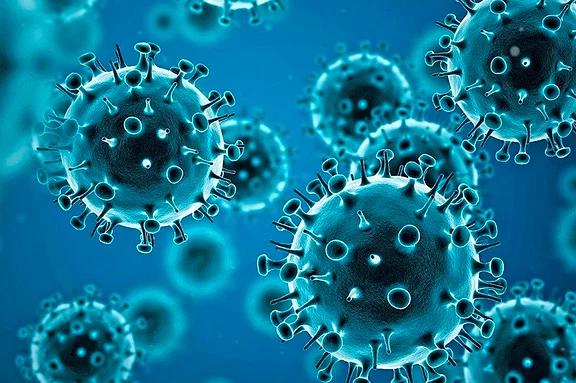
The World Health Organization classified the EG.5 SARS-CoV-2 strain circulating worldwide, including India, as a variant of concern’. However, it said the strain did not appear to be a more significant threat to public health. EG.5 variant or Eris of SARS-CoV-2 first appeared on February 17 of this year. It was designated as a VUM (variant under monitoring) on July 19.
EG.5 (Eris) variant of SARS-CoV-2 was reported for the first time on February 17 this year. It was designated as a VUM on July 19.
In its latest risk assessment on Wednesday, WHO designated EG.5 sub-lineages and EG.5 as a variant to be monitored.
The U.S. National Institutes of Health categorizes variants into three broad categories: 1) ‘variants of importance,’ 2) ‘variants of concern,’ and 3) ‘variants of great consequence.’ VOIs, or Variants of Interest, are genetic variants associated with mutations that can cause increased transmissibility, virulence, or reduction in the neutralization of antibodies.
EG.5 descends from Omicron subvariant XBB.1.9.2. It has an additional mutation to the spike protein used by SARS-CoV-2 to infect human cells.
The WHO stated that the subvariant EG.5.1 within the EG.5 gene lineage has an additional spike mutant, representing 88% of the sequences available for EG.5 or its descendent lines.
GISAID (Global Initiative on Sharing All Influenza data) has received 7,354 sequences EG.5 from 51 countries as of August 7.
China has the largest EG.5 Sequences (30.6% or 2,247). Other countries with more than 100 sequences include the U.S.A., Japan, Canada, and Australia.
Pune, India, has reported only one case of EG.5 in India.
Globally, the proportion of EG.5 cases reported has steadily increased. According to WHO, during epidemiological week 29 (July 17, 2023, to July 23, 2023), the global prevalence of EG.5 reached 17.4%.
In countries like Japan and Korea, there have been concurrent increases in hospitalizations for COVID-19 and EG.5 (lower than the previous waves), but no association has been found between these hospitalizations with EG.5.
WHO and the Technical Advisory Group on SARS CoV-2 Evolution (TAG VE) continue to advise that countries prioritize specific actions to address EG severity and antibody escape uncertainties better.
Global health authority advised that countries share information about the growth advantage and sequence information of EG.5. The international health authority also urged member countries to conduct neutralization tests using representative human blood samples from affected communities and EG.5 virus isolates.
The WHO and the Technical Advisory Group on Covid-19 Vaccine Composition (TAG CO-VAC) continue to assess the impact of variants on Covid-19 vaccines’ performance to inform decisions on vaccine composition updates.