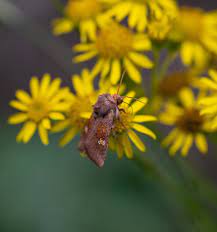
A new study by the University of Sheffield suggests that night-time pollinators, such as moths, may visit as many plants and flowers as bees and should be protected and conserved.
This study also found that moths may be less resilient to urbanization than bees due to their complex life cycles and specific plant requirements.
The study also showed that, despite the threat of moths, they play an essential role in urban plant communities. They account for one-third of all pollination on flowering plants, crops, and trees.
Researchers suggest that urban ecosystems will be healthier if they support the introduction of plants that benefit moths and bees.
The lead author of the study, Dr. Emilie E. Ellis from the University of Sheffield Grantham Institute for Sustainable Futures (GISF) and the Research Centre for Ecological Change at the University of Helsinki, said, “Our research found that the pollen diversity carried by bees and moths decreased in urbanized areas, which means that urban pollinators have fewer flower resources to choose from.”
Plant populations also depend on insects to pollinate, as both moths (and bees) rely on plants. “By protecting urban green spaces and making sure they are developed to support a variety of wildlife and not just bees, we can ensure that both moth and bee populations remain resilient and that our towns and cities stay healthier and greener.”
The study by Dr. Ellis and co-authors revealed that moths and bees visit significantly different plant communities. The study found that in addition to the pale and fragrant flowers moths have been known to visit, they carried more pollen and saw more types and varieties of trees and fruit crops.
There can be an abundance of non-native plants in urban areas. Or, the plant diversity may decrease, reducing insect interactions with less attractive plant species. This could have adverse effects on both plant and insect populations.
Dr. Ellis said the research shows how vital moths are in pollinating crops and plants. The study also has implications for urban planners, policymakers, and those responsible for creating urban green spaces, such as parks and urban horticulture.
Dr. Ellis stated: “People do not appreciate moths, and they are often overlooked in protection and conservation. But, as the moth population has been declining dramatically over the last 50 years, we need to focus more on raising awareness about moths’ role in creating healthy environments.
When planning green spaces, it is essential to consider the diversity of plants and their bee and moth friendliness to ensure that both plants and insects are resilient to the climate crisis.
Stuart Campbell from the University of Sheffield School of Biosciences and senior author of the study said: “Most plant species depend on insects to pollinate them, but knowing exactly which insects pollinate is a difficult question to answer. We know a lot about the 250 bee species in the UK. But we also have more than 2,500 moth species visiting flowers at night. As you would expect, we only know a little about them.
This study used DNA sequencing to identify pollen that sticks to moths flying at night when they visit flowers. Moths pollinate a variety of plants, some of which are wild. Bees, on the other hand, are unlikely to pollinate these species. This study shows that complex networks of plants and insects are responsible for pollination. These networks can be fragile and susceptible to urbanization. “We can also find out which plants are the best food sources for different insects, including moths and nocturnal species. We can use this information to better feed all of our pollinators”.