A team of international astronomers has used the latest technology of VERA, operated by NAOJ in Japan, to discover valuable clues on how “young” supermassive Black Holes form, grow and, possibly, evolve into even more powerful Quasars.
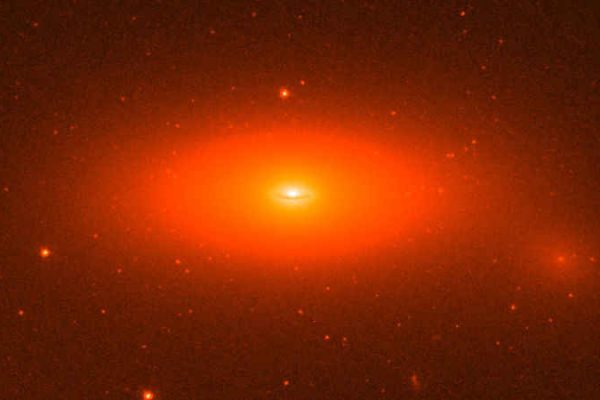
It is widely accepted that almost every galaxy has a supermassive dark hole at its center. These black holes have masses that range from millions to billions of times the mass of the Sun. It is still unclear how these black holes grew into such massive groups.
A team of international scientists led by Mieko Takamura (a graduate student from the University of Tokyo) focused on an active galaxy named Narrowline Seyfert 1 galaxy. The galaxies may contain black holes that are relatively small but rapidly growing, allowing for a study of an early evolution stage. The team used VERA, a radio telescope with a vision 100,000 times stronger than the human eye, to observe the cores of six active NLS1 galaxies nearby. The team used VERA’s newly enhanced ultra-wideband recording capabilities to detect “polarized” waves coming from the centers of these galaxies.
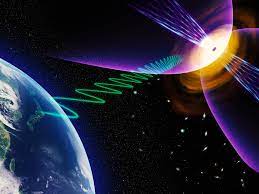
Radio waves near supermassive holes are known to be polarized. The plane of polarization rotates as this polarized radiation propagates through the magnetic gas surrounding the supermassive black hole. This is known as Faraday Rotation. This rotation is proportional to the gas density and the strength magnetic field in the propagating medium. The polarization of light and the Faraday rotation can provide important information about the immediate environment around a black hole.
The new data, along with the sharpest view ever towards the cores of these galaxies, have revealed a significantly greater Faraday Rotation compared to measurements taken towards older, massive, well-developed black holes. This suggests that there is a lot of gas in the nuclei of these galaxies which facilitates the rapid growth and development of central black holes. Takamura says that supermassive black hole undergoes a similar growth process to humans. The black holes we have observed are similar to young boys or girls with a strong desire for rice.
Takamura and al. published these results. The Astrophysical Journal published “Probing active Seyfert 1 Galaxies with VERA Wideband Polarimetry”.