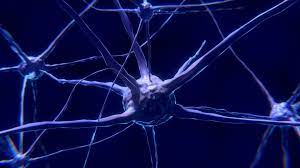
- Researchers have identified a subset of active neurons when mice correct an orientation error while navigating a maze.
- The neurons in the posterior cortex parietal may help the brain learn navigational routes.
- The team will investigate the role these neurons play in navigation and their actions in other brain areas where they have been found.
Our brains use memory and spatial mapping to navigate us to our destination. Making a navigational error that needs a course correction is also routine.
Researchers at Harvard Medical School identified a group of neurons involved in navigation and undergo bursts of activity when mice run a maze, veering off course.
The findings in Nature on July 19 bring scientists closer to understanding navigation and raise new questions. These include questions about these neurons’ role in navigation and their function in other brain areas where they are located.
Christopher Harvey is an associate professor at the Blavatnik Institute of HMS and senior author of the study. This study opens up a whole new area of navigation research.
Make a course correction.
The Harvey lab is studying the posterior parietal cortex to understand navigation better. This region, located near the brain’s rear, is involved in spatial reasoning, planning, and learning movements. The team explained that the cells comprising that region have been a mystery.
Jonathan Green, HMS’s research fellow in Neurobiology, said: “There are many different cell types that could be involved in this area. But when we began the project, we did not know what they might do.”
Understanding the role of these cells is crucial for understanding how they work together to create the neural circuits that power navigation in this brain region.
Green and Harvey enlisted the help of co-author Michael Greenberg and HMS Nathan Marsh Pusey, professor of Neurobiology, HMS Nathan Marsh Pusey, to examine the cell types within the posterior parietal cortex. The researchers borrowed a tool developed in Greenberg’s lab to allow scientists to label cell types more precisely. Researchers used a viral cap to inject a gene regulator element into the posterior cortex parietal, which caused a subtype to express a blue fluorescent protein. The researchers were able to tag these neurons to monitor their activity.
The team then used a technique developed by the Harvey lab, which involves placing mice into a virtual maze. A mouse runs around a ball while a surround screen shows a spatial navigation challenge. In this case, the task was to navigate a T-shaped labyrinth and find a reward on the other end. Researchers recorded the neural activity of the posterior parietal cortex as the mouse performed this task.
Researchers found that the subtypes of neurons were activated when a mouse corrected itself after making a navigational mistake. The same thing happened when the researchers guided the mouse into making a mistake by changing the color of the maze cues or rotating the maze. The neurons did not fire if the mouse made no mistakes or corrected them but never made any.
The researchers then performed a second experiment in which they stimulated the cells using light. The researchers found that neurons are hardwired together, meaning electrical signals can travel directly from one cell to another.
Harvey explained that “These neurons activated together at the exact moment when the mouse diverted from its route, and then had to correct it back in order to receive the reward. This suggests they may be important for learning or correcting navigational routes.”
What is the broader message?
Researchers are keen to explore the why and how of the findings.
Harvey wants to know if this signal can help the brain learn navigational routes. He calls it “a missing puzzle piece for how navigation works.” Researchers are testing this theory by disrupting the activity of neurons and observing how it affects the navigational abilities of mice.
Green explained that they wanted to determine if the signal was used for driving corrections at the moment or if the circuit learned the correct actions with time.
Green pointed out that although the study was conducted on mice, humans also have analog cell types. “This error-correction message that we see in mouse could be relevant to what’s happening in our brain.” More research is required to confirm this.
This subtype of neurons is also found in other brain areas heavily involved with navigation. They are also found in the visual cortex, the epicenter of memory and learning, and the hippocampus. Green wants to know what these neurons do in other brain regions to determine if they have a broader role in learning and error correction.
Researchers plan to use their experimental approach on other subsets in the posterior parietal cortex — some of which also exist in multiple brain regions — to identify more cell types with specific functions.
Green explained that if we could understand the functions of these cells in different brain regions, we would be able to get a better understanding of how this neural circuit works. This circuit is replicated throughout the brain.