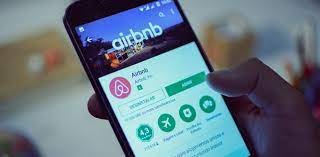
Airbnb is revolutionizing the short-stay industry.
It was launched in 2008, and now it is the largest hotel chain in the world.
There are approximately 100,000 properties listed in Australia.
As a guest or renter, your legal right can be unclear when dealing with a digital platform and a private owner.
This article addresses the six most common questions regarding Airbnb use in Australia.
Note that the laws of other countries may be different.
There may be differences between consumer laws and Airbnb’s terms and conditions, even if they are generally the same.
What happens if the property description is not accurate?
Airbnb’s Terms and Conditions require that the host provide “complete and accurate” information about their property.
The content and photos must always be “up to date and accurate.”
Airbnb’s Host Ground Rules state that listings should “accurately describe the home, and reflect features and amenities available.”
If the property’s description or pictures do not match, you should report it to Airbnb.
False advertising is also likely to violate the Australian Consumer Law (Section 18 prohibits commercial conduct that may mislead, deceive or be likely to deceive).
Report to the Australian Competition and Consumer Commission by clicking here.
Airbnb listings must include “complete and accurate” information about the property.
No specific provision exists to request a refund for inaccurate listings.
You can only cancel your booking if you follow the cancellation policy.
When can I expect to receive a refund?
Your cancellation policy will determine your rights if you cancel or leave early (see “show Trip Details”).
There are several policies that a host can choose from when listing.
Some hotels offer full refunds for cancellations up to five days before check-in. Others require a 30-day notice or partial refunds.
Airbnb may penalize the host if they cancel on you.
Can Airbnb hosts impose unreasonable and harsh ‘house Rules’?
It is generally permissible for an owner to set rules about who can enter the house without permission or how often you can use the washer.
When renting through Airbnb, you enter into a private contract with the property owner.
Contract law allows them to stipulate any terms that they want, as long as they are not illegal.
Reddit users shared this list of “additional Rules” that they claim were posted on the Airbnb door.
The Australian Consumer Law prohibits unfair terms included in “consumer agreements” of standard form, which is what an Airbnb contract would likely qualify as.
An unfair term would be:
* is unreasonable to protect the host’s interests
If it were enforced, * it would be detrimental to you (financially or otherwise).
You must file a civil lawsuit against the host to prove your claim.
You should carefully read the rules and regulations before you confirm your booking.
You agree to the terms of the host whether you have read them or not.
If you disagree, ask the host to amend or waive a rule.
You can book if they don’t move.
What are the limits of an Airbnb host/owner?
The host is responsible for ensuring that every property they manage is safe and secure.
Airbnb’s Community Policy stipulates that properties must be lockable and safe, and hosts should be willing to respond and answer guests’ questions within a reasonable amount of time.
Airbnb states that a host cannot physically interfere or intrude on your stay. They can re-enter only in an emergency or with permission from the guest room owner.
The host cannot enter the guest rooms or bathrooms when guests are present.
It is forbidden for the host to share your private information, photos, or videos without your consent.
If you feel your safety is in danger, contact the police and Airbnb.
You may be eligible for a partial refund if you decide to leave.
The cancellation policy that applies to your booking will determine what rights you have (see below).
Airbnb hosts are prohibited from sharing your private information, photos, or videos without your consent.
Can I claim compensation if I get injured or sick on an Airbnb property?
Airbnb’s clause 4.2 states that by staying in a listed property, you “fully and willingly” accept and acknowledge the risk of “illness or bodily injury,” “disability,” “death,” and other threats.
Clause 19 disclaims that Airbnb is not liable for any “personal injury, bodily harm or emotional distress” caused by its services.
Clause 20 contains an indemnity that prevents you from bringing any claims against Airbnb regarding your stay.
Airbnb is legally protected.
You can make a complaint against the host.
First, you should write a formal letter to the host stating your claim.
Airbnb can also help with disputes.
You can also sue your host if this doesn’t work, but the costs and effort will depend on how severe your injury or illness is.
Airbnb will ensure the host if you make a claim.
Airbnb’s host liability insurance program covers up to $1.5 million for every Airbnb host.
This includes bodily injury to guests or others and theft or damage to property owned by a guest.
By staying at an Airbnb-listed property, you “freely” and “willfully” accept the risk of “illness or bodily injury,” “disability,” or “death.”
Airbnb insurance does not cover intentional violence, mold, or infectious diseases.