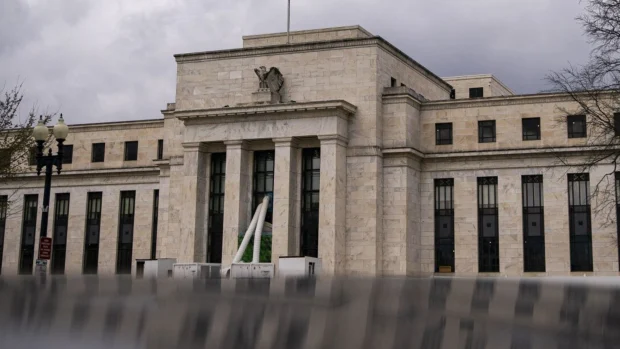
The Federal Reserve has warned that the recent banking turmoil could fuel a broad credit crunch that risks slowing the US economy. At the same time, lenders told the central bank they plan to tighten lending standards due to worries about loan losses and deposit flight.
The Fed published two separate articles this week that highlighted the growing concern about the collapses of Silicon Valley Bank, Signature Bank, and First Republic in March and the failure of First Republic last week.
In its bi-annual report on financial stability, the US central bank stated that, despite “decisive action” taken by officials and regulators to address the recent regional banking crises, concerns about “economic outlook, funding liquidity, and credit quality” could cause “banks and financial institutions” further to reduce the supply of credit in the economy.
The Fed said: “A sharp reduction in credit availability would increase the cost of financing for households and businesses, possibly resulting in a slower pace of economic activity.”
The Fed’s least likely scenario was listed as the top risk to the financial system. It reflected concern about the macroeconomic effects of one of the most turbulent months in American financial history since the global economic crisis of 2008.
Austan Goolsbee told Yahoo Finance Monday (Tuesday, AEST) that the credit crunch or, at least, the credit squeeze is starting. “I believe you must admit that recession is possible.”
Credit contraction fears are rising as the US government faces a possible default due to a stalemate between the White House, Congress, and the Federal Reserve over the borrowing limit increase for the US Government. The amount is $US31.4 trillion (approximately $46.4 trillion). To avoid what Treasury Secretary Janet Yellen warned will be a “catastrophe,” a deal must be reached before early June.
To compile its stability report, the Fed surveyed market professionals and academics. Since the fall, the number of people considering the banking sector’s stress as the most significant stability risk has quadrupled. It is now on par with inflation or tensions between the US and China. The survey also found that concerns about residential and commercial real estate increased.
The Fed released its quarterly Senior Lending Officer Opinion Survey results on Monday. The survey found that banks anticipate tightening lending standards for the remainder of 2023. Bank officers expressed concerns over a possible recession and withdrawals of deposits in the wake of SVB’s collapse.
According to data from the Loan Survey, the largest banks with assets of at least $250 billion dollars blamed a potential slowdown in lending on an uncertain economic forecast.
The Fed reported that, compared to the largest banks in the survey, banks of mid-size [with assets between $50 billion and $250 billion] and others cited more often concerns about their liquidity position, deposit outflows, and funding costs.
Some banks had to reduce their profit margins to attract depositors by offering higher rates on savings accounts. The mid-sized banks that have seen the most significant deposit outflows also expressed concerns about stricter regulations and possible changes in accounting rules.
The Fed’s Financial Stability Report warned that a credit crunch might have a broader impact, resulting in a profit drop and increased business defaults. Reducing investor risk appetite may also lead to a significant reduction in asset prices.
The Fed warned about weaknesses in the commercial property sector. “The magnitude of a decrease in values of properties could be large and could therefore lead to credit losses for holders of CRE loans.”
The central bank also said it would be closely monitoring the performance and commercial estate loan of banks with greater concentration in this sector, as well as expanding the “examination procedure” for those banks.
The Fed stated that “shocks will be less likely to spread to the financial sector through the household sector because household borrowing is modest relative to income and most household debt is owed to those with better credit scores.”
The Fed warned that lending might suffer but said most banks could cope with tighter monetary policies.
“Despite the banking stress of March, high capital levels and moderate exposure to interest rate risks mean that most banks can withstand potential strains caused by higher interest rates. By the fourth quarter of 2022, the banks were well-capitalized, particularly the US global systemically significant banks.