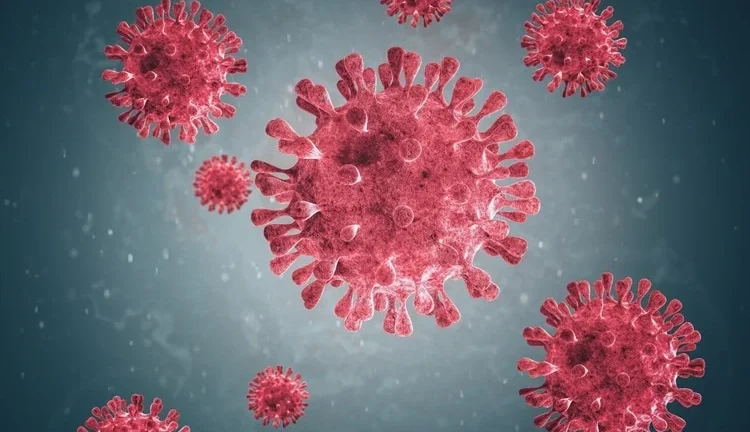
Human metapneumovirus is an essential agent of upper and lower respiratory tract infections (URTIs) in adults and children.
Background
HMPV is a single-stranded ribonucleic acid (RNA) virus with a negative sense. It belongs to the Pneumoviridae and has similar symptoms as the HRSV. HMPV is an enveloped single-stranded negative-sensed virus. It can be classified as HMPV A and HMPV B genotypes.
The HMPV genome is made up of eight genes that encode nine proteins. The scheme in which the proteins are encoded is 3′-N-P-M-F-M2(M2-1/M2-2)- SH-G-L-5′.
Recent studies have shown that the attachment protein (G) ectodomain contains 180- and 112-nucleotide duplicates. These duplications are associated with LRTI in adulthood and immune evasion.
The study
The current study was designed to describe the evolutionary dynamics and genetic diversity in HMPV among adult and pediatric patients in a Barcelona University hospital between 2014-2015 and 2021-2022.
The partial-coding gene sequences of HMPV confirmed in the laboratory were used to characterize it. MEGA.v6.0 software was used to assemble nucleotide sequences.
The trees were built based on the Bayesian information score, which was the lowest. These trees were evaluated using 1,000 bootstrap resamplings. Illumina was used to perform whole genome sequencing, and Nextstrain, Datamonkey, and Nextstrain were used for evolutionary analyses.
Key Findings
The prevalence of HMPV was comparable to other studies in the pre-pandemic period, with a clear seasonal pattern and an annual peak. The start of the COVID-19 pandemic (coronavirus disease) in 2019 disrupted HMPV circulation. Since the summer of 2020, enveloped viruses have circulated, but HRSV and HMPV are not dominant.
HMPV, HRSV, and other viruses were in circulation again in the summer of 2021 and caused two epidemics, with the second peak occurring in autumn. It could be because there was no viral interference or the Spanish relaxed their preventive measures. The prevalence of HMPV during the second peak was higher than in previous seasons. This is likely because two generations had yet to be infected.
Adenoviruses, rhinoviruses, bocaviruses, and enteroviruses were the most commonly detected co-detections. After the COVID-19 Pandemic, co-detection rates increased. A change was also observed in the most widely co-detected virus.
HMPV was more prevalent in children younger than two during the pre-pandemic season. However, this trend changed after the pandemic. A higher percentage of male infants were also affected. In the adult population, women and those older than 50 were more susceptible to infection.
HMPV A circulated in a pattern of cyclic shifts. A2c 180dup was the first to be described, and then A2c 111dup. The A2c 111dup dominance indicates that the 180 nucleotide double-duplication could affect membrane fusion and thus prevent virus replication.
In line with the increase in A2c prevalence and dominance during COVID-19, increased morbidity from HMPV infections was also reported at the end 2009 influenza A(H1N1)pdm09 Pandemic. A2c displayed a greater mean genetic distance at this time and immune-evasive traits that contributed to the aggressive predominance.
Conclusions
HMPV is a severe disease that affects both children and adults. It showed a significant amount of morbidity during the entire study period. COVID-19, a pandemic that began in 2020, disrupted the HMPV outbreak and led to unexpected spikes in the summer and fall of 2021.
WGS revealed the G protein’s high conservation and diversity compared to the F protein. This indicates the need for steric protection of G protein over F. This study provides vital information about the evolution of HMPV in real time and its impact on public safety.