The first Australian budget surplus in over 15 years may be short-lived, as the nation’s exports of commodities are expected to drop by more than 100 billion dollars.
The value of Australia’s energy and resource exports, which reached a peak of $467 billion a year ago at the end of June, is expected to drop to $400 billion and then to $352 billion by next year.
In the forecast, which is due today from the federal government, a “returning to normal” of many commodity prices in light of sluggish economic growth worldwide has been attributed.
Unknown to many, an economist warned that it would be a major headache for Treasurer Jim Chalmers, who had a surplus of $22 billion for the last financial year due to record exports.
Stephen Koukoulas, managing director of Market Economics, said that exports are “off the boil.”
He said, “And because our main trading partner — China — has its own economic concerns as well as an economic slowdown.”
Record profits set to fall.
The Department of Industry, Science and Resources, in its latest snapshot of Australia’s quarterly export performance, noted that prices for the majority of the country’s resource exports are falling.
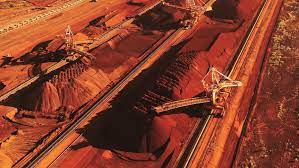
Iron ore, Australia’s largest export commodity, was expected to drop in value from $124 billion to $99 billion by 2024-25.
The forecast was that earnings from the export of liquefied gas would decline from $93 billion, a record amount in 2022-2023, to $71 billion for this year’s financial period and $63 billion for 2024-25.
The story was similar for thermal coal and metallurgical coke.
The value of Australia’s lithium exports is expected to drop from $20 billion to $16 billion by the end of next year.
After the Russian invasion of Ukraine and years of supply-chain disruptions, prices for many commodities have been in orbit.
She said that while Australia’s overall export revenue has slowed from its record highs, the country’s energy and resources exports are still strong and continue to underpin Australia’s economic well-being.
Australia is a reliable, stable, and consistent supplier of energy and resources to our customers.
We are building investment, partnerships, and supply chains in our vital minerals sector to help the world achieve its commitments to reduce emissions.
Mr. Koukoulas stated that the drop in export values would likely put pressure on Australia’s budget bottom line.
He said that high commodity prices were responsible for Australia’s surprising large budget surplus in 2022-2023 by increasing taxes on company profits and payroll tax.
“Good luck starting to fade.”
Koukoulas, however, said that a drop of $100 billion in export revenues would usually translate into a revenue loss for the federal government between $10 and $15 billion. This would wipe out a large part of the surplus recorded for the last financial year.
“It will put a hole on the bottom line for Australia’s income and Australia’s GDP, and it will, of course, have some implications for the Federal Budget,” Mr Koukoulas stated.
“For Jim Chalmers, the budget, and that pleasant surprise of a $22 billion budget surplus we had… most of that was due unexpectedly high commodities prices.
“And if this is no longer available and it’s actually reserved, then the budget will, of course, be more difficult.
“They have a bit of luck and a bit of good management in terms of the budget situation for 2022-23.
Koukoulas also said that the drop in export earnings would weigh on any future interest rate increases for this year.
Today, the Reserve Bank of Australia’s board is scheduled to meet, and it is expected that rates will remain at 4.1 percent.
The markets, however, have a higher probability of a rate increase at the November meeting, which will take place on Melbourne Cup Day.
Rates are not likely to rise as long as the economy is still growing.
Mr Koukoulas stated that although inflation increased again in August, a large part of it was due to a surge in fuel prices. The RBA is likely to place greater emphasis on the increasing unemployment rate.
He said, “I bet on rates being held in November, October and December. If I go that far.”
Ms. King stated that despite the slowdown in demand, Australia’s essential minerals would continue to be sought after by countries looking to decarbonize energy systems.
“During my recent visit to Europe and UK, I met with government leaders and industry leaders seeking access to Australian rare earth elements and critical minerals,” Ms. King stated.
The world is working to develop the technology necessary to decarbonize.