
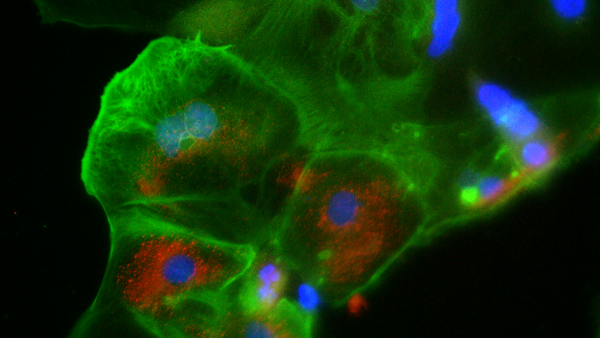
In a landmark paper published on 14 July by Nature Cell Biology, Australian researchers led by Prof. Jose Polo of Monash University and the University of Adelaide, and Professor KantaSubbarao of the University of Melbourne, have shown how COVID-19 infects the human placenta. Researchers have shown that COVID-19 infection during pregnancy can lead to adverse outcomes. However, little is known […]

Macrophages could play a significant role in the development and progression of atrial fibrillation.
The current treatments for atrial flutter (AFib) are a heart condition that causes fast and irregular heartbeats and can cause stroke and heart failure. They have many side effects and do not work to prevent recurrence. A new study by researchers at Massachusetts General Hospital and published in Science shows that specific immune cell types play a […]
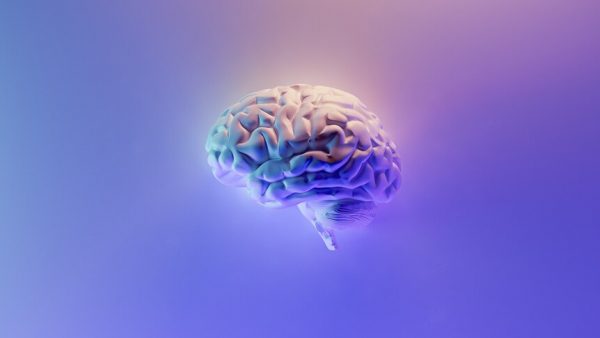
Study shows that low-cost Ketamine is effective for people with severe depression who are resistant to medication.
New research suggests that a cheap version of the sedative Ketamine could help people with depression. Researchers from Australia and New Zealand examined whether the generic form of Ketamine would help relieve depression resistant to other treatments. Harvard University says that the first treatment will not help two-thirds (or 63%) of those with depression. The […]

Australia donates 30 Bushmaster armored personnel carriers to Ukraine.
Australia has sent another 30 Bushmaster armored vehicles to eastern Ukraine. The announcement was made by Anthony Albanese, Prime Minister of Canada, after a meeting between him and Ukrainian President Volodymyr Zelenskyy during the NATO summit held in Vilnius. “The Bushmasters is a symbol for Australia’s support of Ukraine,” Mr Albanese stated. They are highly […]

ASX jumps after Wall Street’s inflation-boosting boost; $A rises
The Australian sharemarket rose Thursday morning after Wall Street reached its highest level for over a month amid signs of cooling inflation. S&P/ASX200 rose 1.3 percent, or 90.6 points, to 7,226.3 at 10:25 am, with gains all over the board. The S&P/ASX200 is up 1.3 percent, or 90.6 points, to 7,226.3 at 10:25 am AEST, […]

Starlink satellites’ ‘unintended electromagnetic radiation’ could affect radio astronomy measurements.
Astronomers are concerned about the impact of satellite constellations like SpaceX’s Starlink. This constellation comprises thousands of spacecraft and interferes with night-sky observations. SpaceX listened to concerns that light reflections could interfere with astronomy measurements and changed the design of the spacecraft. The Astronomy & Astrophysics Journal published a study last week that found radio telescopes can detect low-frequency […]
A new, thin-lensed telescope design could far surpass James Webb – goodbye mirrors, hello diffractive lenses.
Astronomers have discovered more than 5,000 planets outside of the solar system to date. The grand question is whether any of these planets are home to life. To find the answer, astronomers will likely need more powerful telescopes than exist today. I am an astronomer who studies astrobiology and planets around distant stars. For the last seven years, I have co-led a […]
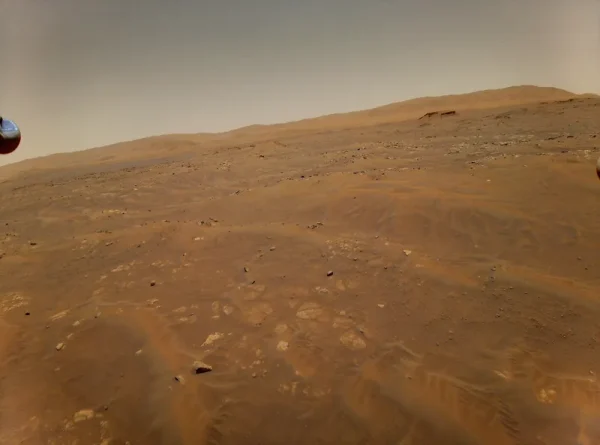
NASA’s Perseverance Rover Discovers Preserved Organic Matter On Mars
Researchers analyzing images and data from Perseverance’s rover on Mars found organic molecules in Jezero Crater. This could provide evidence about the carbon cycle of the planet and its ability for life. It is not proof that there was life on Mars in the past, but rather a sign of conditions that were once present. […]

NASA’s James Webb Space Telescope’s latest image shows a ‘chaotic scene’ of newborn stars
NASA released another breathtaking image to commemorate the first anniversary of the release of the first full-color image taken by the James Webb Space Telescope. The US space agency has released a picture of the Rho Ophiuchi complex, located 390 light years away from Earth. What does this image represent? Stars and space dust A NASA […]
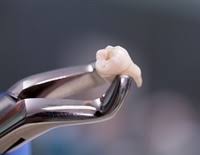
Researchers offer hope to patients with lower lip sensorial loss.
The inferior alveolar (IAN) nerve is a branch from the trigeminal, providing sensation to the lower lips. Dental procedures, such as tooth extraction, implantation, and periodontal surgeries, can damage the IAN. These procedures may lead to sensory dysfunction and a decline in the patient’s well-being. The peripheral nervous system has been shown to have a […]